{{ 'fb_in_app_browser_popup.desc' | translate }} {{ 'fb_in_app_browser_popup.copy_link' | translate }}

{{ 'in_app_browser_popup.desc' | translate }}

Tea after a meal | NT$100 off

Your Shopping Cart is empty.
{{ (item.variation.media ? item.variation.media.alt_translations : item.product.cover_media.alt_translations) | translateModel }} {{ (item.variation.media
                    ? item.variation.media.alt_translations
                    : item.product.cover_media.alt_translations) | translateModel
                }}
{{ 'product.bundled_products.label' | translate }}
{{ 'product.bundle_group_products.label' | translate }}
{{ 'product.buyandget.label' | translate }}
{{ 'product.gift.label' | translate }}
{{ 'product.addon_products.label' | translate }}
{{item.product.title_translations|translateModel}}
{{ field.name_translations | translateModel }}
  • {{ childProduct.title_translations | translateModel }}

    {{ getChildVariationShorthand(childProduct.child_variation) }}

{{ 'product.set.open_variation' | translate }}
  • {{ getSelectedItemDetail(selectedChildProduct, item).childProductName }} x {{ selectedChildProduct.quantity || 1 }}

    {{ getSelectedItemDetail(selectedChildProduct, item).childVariationName }}

{{item.variation.name}}
{{item.quantity}}x NT$0 {{ item.unit_point }} Point
{{addonItem.product.cover_media.alt_translations | translateModel}}
{{ 'product.addon_products.label' | translate }}
{{addonItem.product.title_translations|translateModel}}
{{addonItem.quantity}}x {{ mainConfig.merchantData.base_currency.alternate_symbol + "0" }}

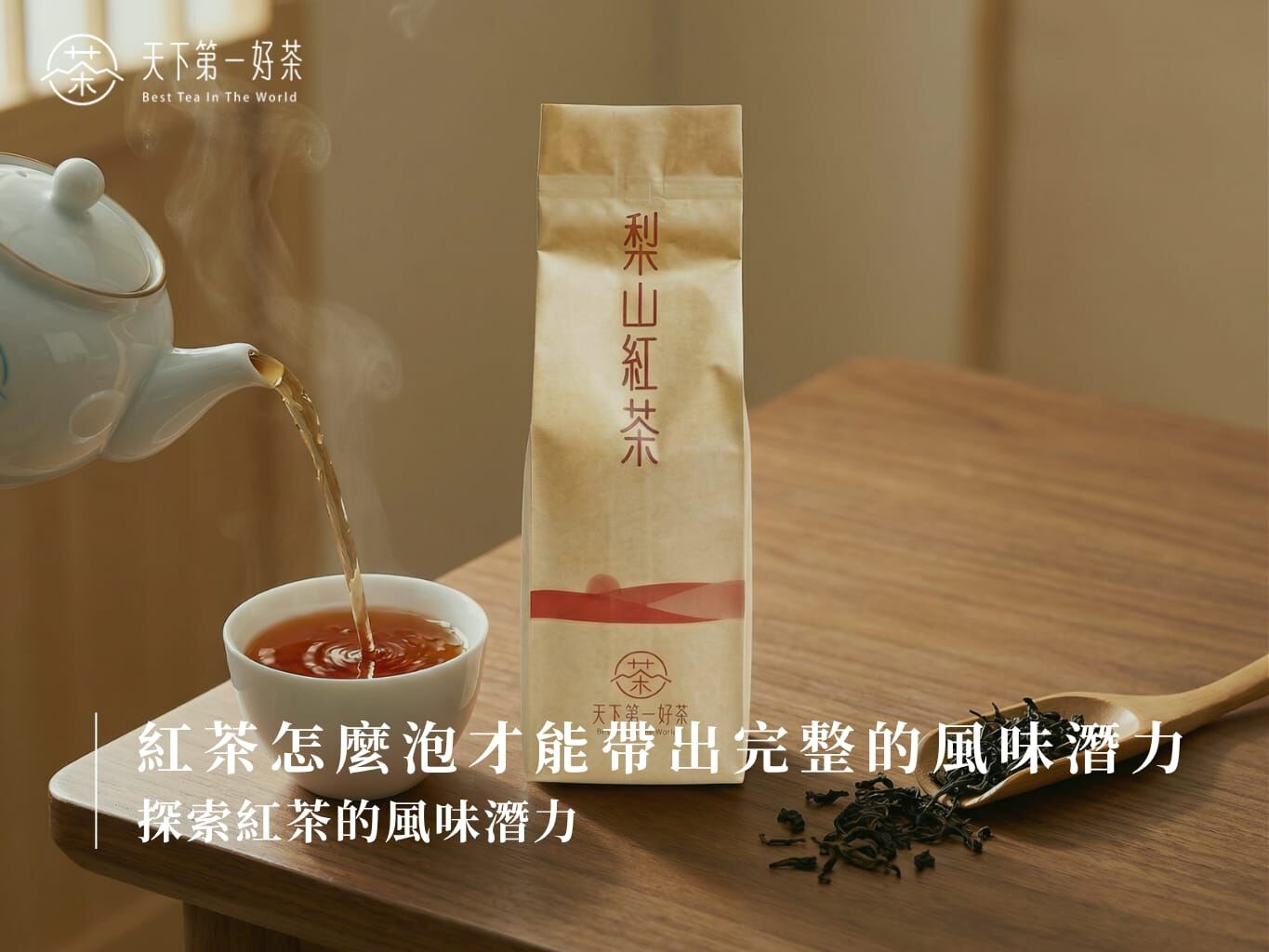
Black Tea Brewing Guide: Time, Heat & Tools

How to Brew Black Tea to Bring Out Its Full Flavor Potential

Even with the same black tea, some people brew it into something rich and sweet, while others end up with something bitter and thin—the difference usually comes down to water temperature and steeping time. This article clearly explains the brewing approach for BESTEA’s four Taiwanese high-mountain black teas, so each time you brew, you can get closer to its best expression.

CONTENTS
Key Points of This Article
1. Introduction to four high-mountain black tea varieties
2. Recommended water temperature and steeping time for each tea
3. Choosing the right tea-brewing vessel
4. Plain drinking vs blended drinks vs food pairing

BESTEA’s Four Taiwanese High-Mountain Black Teas

All four are black teas from Taiwan’s high-altitude regions, each with its own origin character and flavor profile. Get to know them a little before brewing, so you know what to expect when you taste them:

Altitude 2000m+
Lishan Black Tea
The high altitude slows the growth of the tea leaves and makes the tea quality more refined. Its aroma is elegant with fruity notes, the liquor is bright and clear orange, and the taste is smooth and sweet with extremely low bitterness and astringency. The delicacy created by the high-mountain environment is its most obvious character.
TTES No. 18
Sun Moon Lake Ruby
A representative tea bred from a native Taiwanese cultivar, it carries a distinctive natural minty coolness and cinnamon aroma. The tea liquor is rich and full-bodied, with an obvious sweet aftertaste. Among Taiwanese black teas, it has the highest flavor recognizability and leaves a strong impression even on first encounter.
Lishan Tea Region
Huagang Black Tea
Also a high-cold black tea from the Lishan region, it has a bright and lifted floral aroma. Its taste sits between Lishan Black Tea and Ruby Black Tea—combining the clarity of high-mountain tea with the fruity sweetness characteristic of Taiwanese black tea. It is especially suitable for people just starting to drink Taiwanese black tea.
Altitude 2600m
Fushoushan Black Tea
Produced at Fushoushan Farm, the extreme environment at 2600 meters gives it a thicker tea texture and a more intense, lasting floral-fruity aroma. Among the four, it has the richest layering. It is best enjoyed slowly, allowing its aroma and sweetness to unfold infusion by infusion.

Recommended Water Temperature and Steeping Time for Each Tea

Water temperature is the most direct variable affecting black tea flavor. The following are common starting ranges, but they can still be fine-tuned based on leaf integrity, teaware, and personal taste:

Lishan Black Tea
Elegant fruity aroma・smooth and sweet
90–95°C 2–3 min 3–5g / 200ml
This delicate high-mountain black tea is better suited to a slightly lower water temperature, making it easier to preserve its elegant fruity aroma and smooth mouthfeel. If the water is too hot, the aroma may be suppressed and the tea liquor may feel thin.
Sun Moon Lake Ruby
Minty coolness・cinnamon aroma・rich sweet aftertaste
95–100°C 2–3 min 3–5g / 200ml
Its full tea body needs a slightly higher water temperature to fully bring out its minty coolness and cinnamon aroma. For the first infusion, smell the aroma before sipping—the aromatic changes are the richest. It is also very suitable for cold brewing, where the floral and fruity notes become even more lifted.
Huagang Black Tea
Bright floral aroma・fruity sweetness・best for beginners
90–95°C 2–3 min 3–5g / 200ml
The floral base note of the Lishan region is best expressed at a slightly lower water temperature, allowing its bright floral-fruity aroma to show fully. Its approachable and non-stimulating character makes it very suitable for people trying Taiwanese high-mountain black tea for the first time.
Fushoushan Black Tea
Rich floral-fruity aroma・high complexity・best enjoyed slowly
95–100°C 2–3 min 3–5g / 200ml
The high-cold environment at 2600 meters creates a thicker tea body, and a slightly higher water temperature fully brings out its rich floral-fruity aroma. It is recommended to extend each infusion by 5–10 seconds so the aroma and sweetness unfold in layers, rather than extracting it too strongly all at once.
Quick guide: If you want elegant floral notes → Lishan Black Tea or Huagang Black Tea, 90–95°C; if you want richer, more distinctive flavor → Sun Moon Lake Ruby or Fushoushan, 95–100°C.

Not sure where to start? A tea set lets you compare all four at once and find the one that suits your taste best.

View tea sets →

Choosing the right tea-brewing vessel

Brewing vessels affect heat retention and pouring speed. Choosing the right one helps the same tea perform better:

Vessel 01
Porcelain or ceramic teapot
It retains heat well and is suitable for black tea that needs a relatively high temperature, keeping the tea liquor extracting within the ideal range.
Vessel 02
Glass teapot
It allows you to clearly observe the liquor color—the shift of high-mountain black tea from light orange to deep brown is an intuitive way to judge strength.
Vessel 03
Gaiwan
It is convenient for controlling steeping time, allowing quick infusions and quick pours, and is best for precisely managing the strength of each brew.
Taiwanese high-mountain black tea, delivered directly from the origin
Lishan, Sun Moon Lake Ruby, Huagang, Fushoushan—each of these four has its own character, and all come from Taiwan’s high-altitude regions, with no blending and no additives. Every sip carries the true spirit of the mountain.

Ways to enjoy black tea

Plain drinking vs blended drinks

Plain drinking
Taste the original flavor
The first time you try a new black tea, drink it plain first. Only then can you fully experience the elegant fruity aroma of Lishan, the minty coolness of Ruby, and the floral-fruity layers of Fushoushan.
Blended drinks
Best for fuller-bodied styles
Add milk to Sun Moon Lake Ruby to make milk tea, where the minty coolness appears subtly through the creamy aroma; add a little honey to Fushoushan, and its floral-fruity aroma becomes sweeter and fuller.

Food pairing

Taiwanese high-mountain black tea has a delicate flavor, so it pairs best with lighter foods. Avoid foods that are too salty or spicy, as they may overpower the tea aroma:

Lishan Black Tea
Fruit tart or light sponge cake, allowing the elegant fruity aroma and the dessert to complement each other.
Sun Moon Lake Ruby
Dark chocolate or slightly bitter desserts—the minty coolness and cocoa bitterness are an excellent match.
Huagang Black Tea
Plain scones and fresh cream, where the floral and creamy notes lift each other—the most classic afternoon tea pairing.
Fushoushan Black Tea
Honey cake, dried longan walnut cake, and other honeyed desserts, which make its rich floral-fruity aroma even more dimensional.
FREQUENTLY ASKED
Frequently Asked Questions
Q What are the differences between these four Taiwanese black teas?
Lishan and Huagang both come from the Lishan region and have a bright floral aroma and clear mouthfeel; Sun Moon Lake Ruby has a unique minty coolness and cinnamon aroma, making it the most distinctive in flavor; Fushoushan is grown at the highest elevation (2600m) and has the richest floral-fruity aroma and the most complex layering.
Q Do Taiwanese high-mountain black teas always need to be brewed with boiling water?
Not necessarily. Lishan Black Tea and Huagang Black Tea can fully express their most delicate floral-fruity aroma at 90–95°C; Sun Moon Lake Ruby and Fushoushan Black Tea have a thicker tea body, so 95–100°C helps bring out their aroma and layering more fully.
Q Can these black teas be cold brewed?
Yes. Cold-brewed Taiwanese high-mountain black tea brings out even more sweetness and almost eliminates bitterness and astringency. A recommended tea-to-water ratio is about 1:100, with cold steeping in the refrigerator for 6–8 hours. Sun Moon Lake Ruby becomes especially clear and floral when cold brewed, making it perfect for summer.
Q If it is my first time trying Taiwanese black tea, which one should I start with?
Huagang Black Tea has a bright floral aroma and an approachable, friendly mouthfeel, making it the easiest entry point. If you want to directly experience the unique character of Taiwanese black tea, start with Sun Moon Lake Ruby—the minty coolness is something you will not find in any other tea.
EXPERIENCE THE COMPLETE FLAVOR
Black tea flavor is only complete when it is brewed right
Lishan, Ruby, Huagang, Fushoushan—each of BESTEA’s Taiwanese high-mountain black teas has its own ideal water temperature and time. You can taste the difference from the very first infusion.