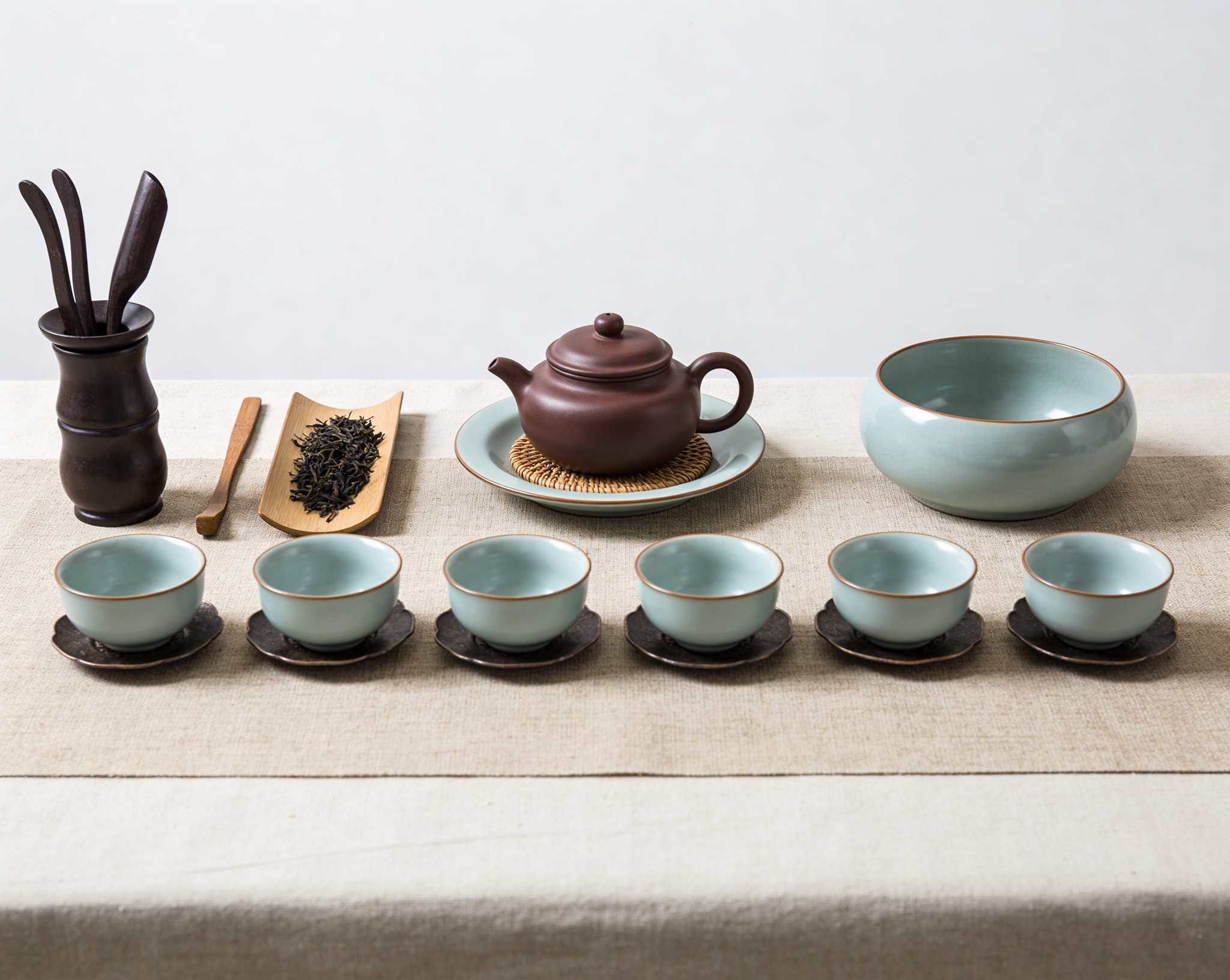
 Tea, as one of the treasures of Chinese culture, has held a place of great importance since ancient times. It is indispensable in social gatherings, ceremonial customs, and everyday drinking, embodying a refined and distinctive aesthetic of living. China, the birthplace of tea, has a tea culture dating back thousands of years that has evolved through time into a rich tapestry of diverse varieties and unique flavors.
From planting and harvesting in the tea garden to processing and tasting, every step reflects the wisdom and dedication of tea cultivators. The origin, quality, and craftsmanship of tea leaves play a decisive role in flavor, also embodying the philosophy of harmonious coexistence between humans and nature.
CONTENTS
Key Highlights
1. Origins & Historical Development
2. Processing Craftsmanship & Characteristics
3. Daily Drinking & Flavor Compounds
4. Literature, Art · Etiquette & Social Customs
Origins & Historical Development
The history of tea can be traced back to ancient China, where it is said that the wonderful taste of tea was discovered as early as around 3000 BCE. From the traditional tea ceremony that began in the Tang Dynasty to its peak in the Song Dynasty, tea culture has continuously evolved alongside social progress.
🍵 Tang Dynasty
The tea ceremony embraced Zen meditation, viewing tea as a beverage for spiritual cultivation. Lu Yu, the Sage of Tea, authored "The Classic of Tea" (Cha Jing), establishing the theoretical foundation of Chinese tea culture.
🏛 Song Dynasty
Tea ceremony developed into imperial court culture, merging with literature and art to become a pursuit of scholars and literati. Subsequently, tea trade spread outward, and cultivation and processing techniques continued to innovate.
Processing Craftsmanship & Characteristics
Each type of tea has its own unique production process and characteristics. Below is the complete workflow from harvesting to finishing.
Step
Description
Key Points
Harvesting
Picking fresh tea leaves; timing varies by tea type
Green tea is typically picked on spring mornings to ensure vibrant color and complete aroma
Withering
Moisture in the tea leaves slowly evaporates
Color gradually transforms, releasing distinctive aromas
Rolling
Breaks cell walls, allowing cell fluids to seep out
Promotes chemical changes; can be done by hand or machine
Oxidation & Roasting
Different treatments depending on the tea type
Dark tea undergoes natural fermentation for depth; oolong and green tea use high-heat roasting to halt oxidation
Finishing
Sorting, grading, and drying steps
Ensures consistent tea quality; some require additional roasting for enhanced aroma
Want to taste Taiwan high-mountain tea crafted with traditional techniques? BESTEA ships directly from the source with guaranteed quality.
Explore All Teas → Daily Tea Drinking & Flavor Compounds
Tea leaves contain tea polyphenols, L-theanine, caffeine, and various minerals. Below is how the main ones come through in the tea liquor:
Aspect
Key Compounds
Description
Astringency and Sweet Finish
Polyphenols · Tannins
The main source of astringency and returning sweetness in the tea liquor: slightly brisk at first, followed by a sweet finish
After-Meal Cup
Caffeine · Tannins
A light bitterness and gentle astringency give the liquor a clean finish; a cup after meals tastes crisp
Strength of Flavor
Polyphenols · Caffeine
How much of each reaches the cup varies with tea type, water temperature, and steeping time, shaping how strong and brisk the liquor tastes
Bitter-Sweet Balance
Caffeine · L-Theanine
Caffeine brings a light bitterness and L-theanine a fresh sweetness; their ratio shapes the balance of each tea
Fresh Sweetness
L-Theanine
The main source of the fresh, mellow sweetness in the tea liquor, more pronounced when brewed at lower temperatures
The above is a general introduction to tea compounds and flavor. Tea contains caffeine; pregnant women and those sensitive to caffeine should drink it in moderation and take care when drinking it close to bedtime.
A Thousand Years of Tea Culture, Starting with One Great Cup
BESTEA carefully selects Taiwan high-mountain teas, carrying on traditional tea-making craftsmanship with SGS pesticide residue testing — quality assured from the tea garden to your cup.
Literature & Artistic Expression
Poetry
Since ancient times, many poets have loved writing while savoring tea. Tea's fragrance sparks creative inspiration, and the spirit of tea and the imagery of poetry complement each other beautifully.
Calligraphy
Calligraphers often use tea and ink as their medium, completing their work in the contemplative atmosphere of tea appreciation. Tea and calligraphy alike serve as daily practices for cultivating the mind.
Painting & Opera
Tea sets and tea settings frequently serve as scene elements, passing on tea culture through character dialogue. In painting, tea has become an indispensable thematic element.
Etiquette & Social Customs
Tea culture encompasses not just the act of drinking tea, but also a system of etiquette and social customs. Staying mindful during tea appreciation and carefully savoring the aroma and mouthfeel of the leaves is a form of respect for both the tea and nature.
"In Chinese society, inviting friends and family to share tea is an important way to connect emotionally. The host expresses respect for guests through thoughtfully prepared tea service. The cultural significance of tea extends beyond drinking itself — it cultivates social bonds and a sense of community."
The way of tea pursues purity of mind and tranquility of thought, inviting you to stay present with each cup and offering a rare moment of stillness amid the busyness of daily life.
Q What are the main types of tea?
There are six main categories: green tea, black tea, white tea, yellow tea, oolong tea, and dark tea. Each has different processing methods and flavor profiles, with oxidation levels ranging from unoxidized (green tea) to fully oxidized (black tea). Taiwan is best known for its oolong tea, covering high-mountain origins such as Alishan, Lishan, and Dayuling.
Q What are the main compounds in tea, and how do they shape its flavor?
Tea contains compounds such as polyphenols, caffeine, and L-theanine: polyphenols are the main source of astringency and returning sweetness in the tea liquor, caffeine adds a light bitterness, and L-theanine brings a fresh sweetness. Together they shape the flavor of each tea. A cup after meals tastes clean and crisp. Tea contains caffeine; pregnant women and those sensitive to caffeine should drink it in moderation and take care when drinking it close to bedtime.
Q How do I brew tea properly?
Different tea types require different water temperatures: green tea at approximately 75–80°C, Taiwan high-mountain oolong at approximately 90–95°C, and black tea at approximately 90–100°C. The first infusion is recommended at 50–60 seconds, with subsequent infusions adjusted to taste. Ceramic or porcelain teapots best showcase tea's aromatic layers.
Q Where can I buy high-quality Taiwan tea?
Choosing brands that provide origin information and SGS pesticide residue test reports offers the best assurance. BESTEA carefully selects Taiwan high-mountain teas covering Alishan, Lishan, Dayuling, and other origins — shipped directly from the source.
BESTEA — HERITAGE IN EVERY CUP
A Thousand Years of Tea Culture, Distilled into Every Cup
From Tang and Song Dynasty tea ceremonies to modern appreciation, the essence of tea culture has never changed. BESTEA Taiwan high-mountain teas carry on traditional craftsmanship with SGS pesticide residue testing, letting you experience tea's character and nature's purity in your daily life.
KEEP READING
You Might Also Like


