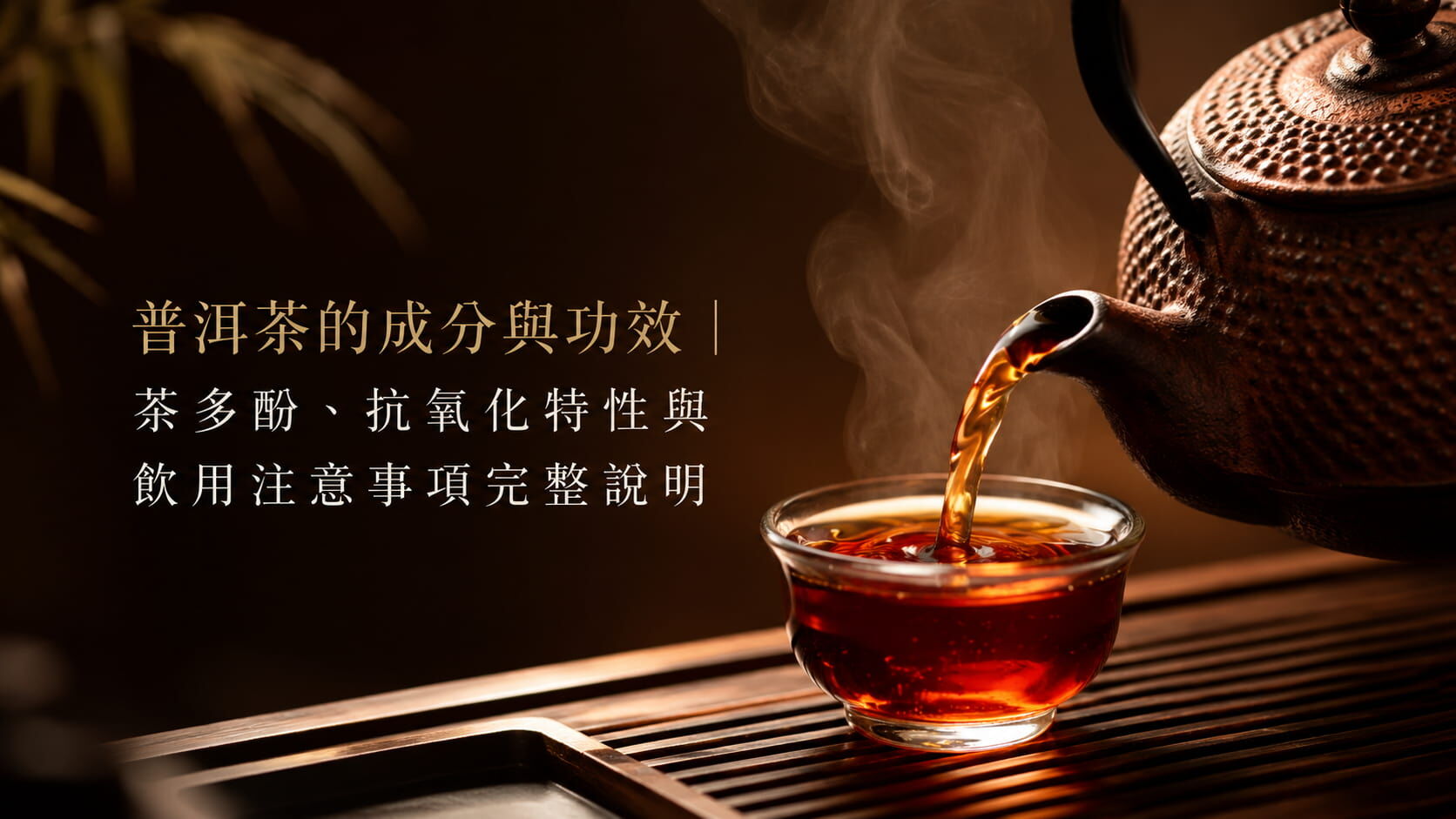
 Pu-erh tea originates from the Yunnan region of China and is a type of tea produced through a unique fermentation process, with a long history and deep cultural heritage. It contains tea polyphenols, catechins, caffeine, and trace elements, making it a daily choice for many tea enthusiasts. Choosing authentic Pu-erh tea and storing and brewing it correctly are essential to truly experiencing its distinctive flavor.
CONTENTS
Key Highlights
1. Compounds & Daily Drinking Reference
2. Antioxidant Properties
3. Calming Effects & Minerals
4. Drinking Suggestions & Precautions
Pu-erh Tea Compounds & Daily Drinking Reference
Pu-erh tea contains various active compounds, each with its own characteristics. Below are the supportive benefits most commonly cited in current research:
Compound
Properties
Daily Drinking Reference
Tea Polyphenols
Antioxidant compounds that help neutralize free radicals
Generally considered to offer supportive antioxidant effects; individual results vary
Catechins
A major component of tea polyphenols
Some studies suggest supportive effects on lipid metabolism
Caffeine
A gentle energizing compound
Works synergistically with L-theanine for steadier alertness than pure caffeine
Volatile Oils
Influence the tea's aroma profile
Drinking tea after meals offers a supportive palate-cleansing effect
The above is general health knowledge for reference only and does not constitute medical advice. Please consult a healthcare professional if you have specific health concerns.
Enjoy mellow, rich-bodied teas? BESTEA's roasted oolong and Dong Ding oolong are equally warm and smooth — shipped directly from the source.
Explore the Roasted Tea Series → Antioxidant Properties
Tea polyphenols and catechins in Pu-erh tea are the primary antioxidant compounds, helping to neutralize free radicals and reduce cellular oxidative stress.
✦
Tea Polyphenols & Catechins: Offer supportive free-radical-neutralizing effects — the most important antioxidant compounds in tea.
✦
Vitamins C & E: Natural antioxidants with supportive cell-protective properties.
✦
Zinc & Manganese: Trace minerals involved in various enzymatic reactions in the body.
Calming Effects for Daily Drinking
The natural compounds in Pu-erh tea offer the following supportive benefits for daily consumption:
Aspect
Key Compounds
Description
Relaxation Support
L-Theanine
Helps soothe emotions and ease feelings of stress
Gentle Alertness
Caffeine · Amino Acids
Provides steady alertness, less likely to cause jitters
Fatigue Relief
Moderate Caffeine
Provides gentle energy, suitable for daily consumption
Digestive Aid
Polyphenols · Tannins
Drinking after meals offers a supportive palate-cleansing and digestive effect
Enjoy Mellow, Rich-Bodied Teas?
BESTEA's roasted oolong and Dong Ding oolong offer the same warm, mellow drinking experience — gentle on the palate and perfect for after meals. SGS pesticide residue certified, shipped directly from Taiwan.
Mineral Content
Pu-erh tea contains a variety of minerals, serving as one of the sources for daily trace element intake through tea drinking:
Manganese · Magnesium
Involved in various enzymatic reactions; essential daily trace minerals
Potassium
One of the minerals needed to maintain electrolyte balance in the body
Vitamin C
A natural antioxidant with supportive cell-protective properties
Tea Polyphenols
Antioxidant compounds — the most important active substances in Pu-erh tea
Drinking Suggestions & Precautions
✦
Pu-erh tea is highly fermented with a gentle character, generally considered less irritating to the stomach than green tea. Drinking after meals is a common habit for many.
✦
It is recommended to drink 2–3 cups per day at most; excessive consumption may affect sleep due to caffeine intake.
⚠
Pregnant women, breastfeeding mothers, children, and those with sensitive stomachs are advised to consult a doctor before drinking.
The above compound information is general knowledge for reference only and does not constitute medical advice. Please consult a healthcare professional if you have specific health concerns.
Q How is Pu-erh tea different from regular oolong?
The biggest difference is in the fermentation method. Pu-erh tea undergoes "post-fermentation" (pile fermentation and aging), resulting in a gentle, mellow character with a deep red liquor. Oolong tea is "semi-oxidized," with bright floral notes and a more golden liquor. Those who enjoy rich, mellow mouthfeel tend to prefer Pu-erh, while those who love clean floral elegance often choose Taiwan high-mountain oolong.
Q What antioxidant compounds does Pu-erh tea contain?
Pu-erh tea contains tea polyphenols, catechins, vitamins C and E, and other antioxidant compounds that help neutralize free radicals. Due to its higher level of fermentation, polyphenol content is typically lower than green tea, but its character is gentler and generally less irritating to the stomach.
Q What should I be aware of when drinking Pu-erh tea?
Pu-erh tea contains caffeine, so 2–3 cups per day is recommended, and it should be avoided before bedtime. Drinking large amounts on an empty stomach may cause stomach discomfort. Pregnant women, breastfeeding mothers, or those with specific health conditions should consult a doctor before drinking. The above is general knowledge for reference and does not constitute medical advice.
Q Does BESTEA have teas with a smooth, mellow profile similar to Pu-erh?
Yes. BESTEA's Dong Ding Oolong and roasted oolong series offer a warm, mellow, full-bodied drinking experience — ideal for those who enjoy roasted, mature flavors. While the processing differs from Pu-erh, they are equally smooth and easy to drink, and also excellent for after-meal enjoyment.
BESTEA — WELLNESS IN EVERY CUP
Love Smooth, Mellow Teas? Try Taiwan Roasted Oolong
BESTEA's Dong Ding Oolong and roasted tea series — gentle character, mature rounded aroma, SGS pesticide residue certified, shipped directly from Taiwan.
KEEP READING
You Might Also Enjoy


