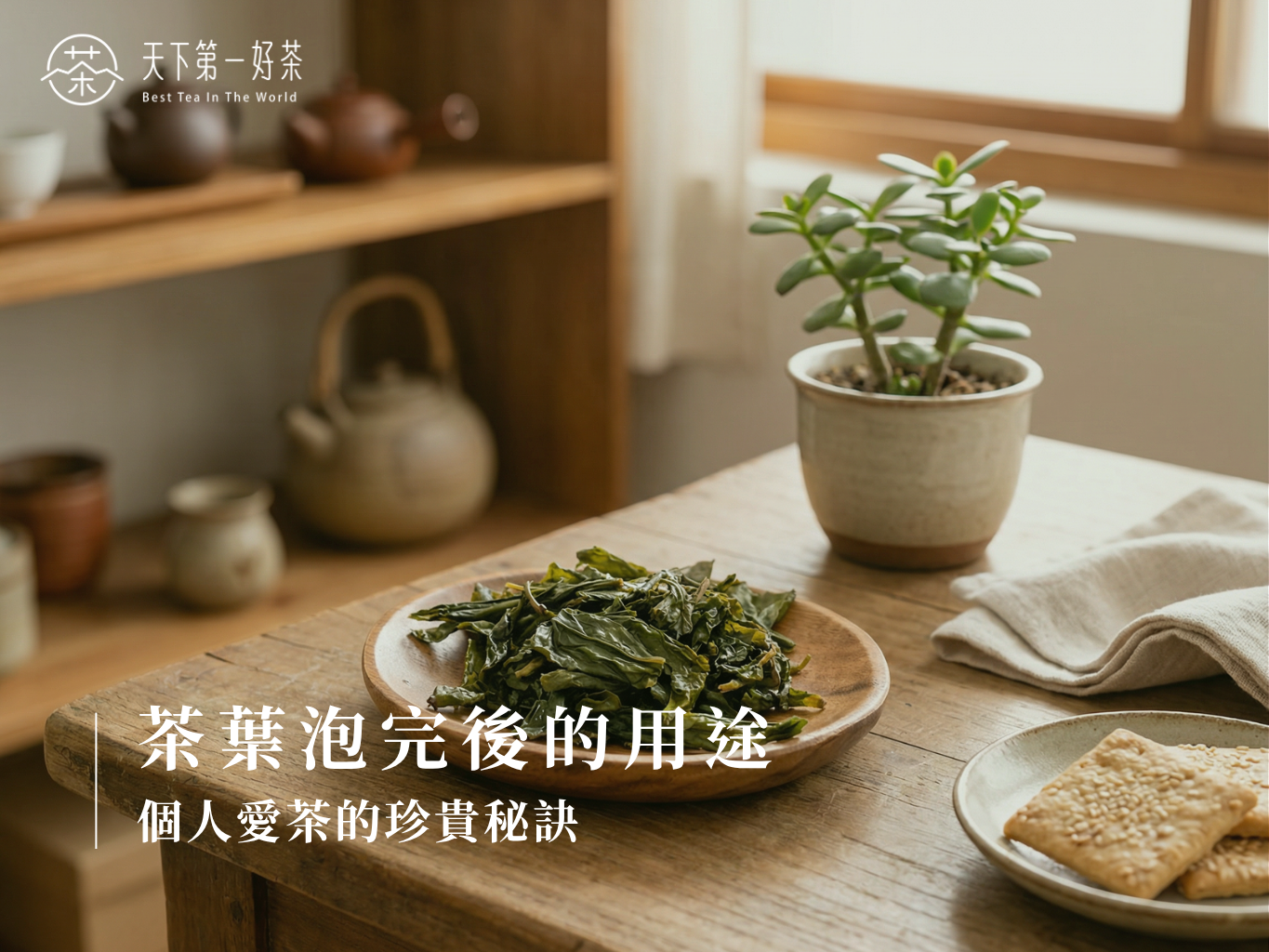
 Most people throw away brewed tea leaves right after use. But they can actually be reused in many ways—cooking, cleaning, gardening, fragrance, and more. Each has practical methods, and they are simpler than you might think.
Used tea leaves still retain fiber and some remaining compounds. With proper handling, they can be repurposed in everyday life. This article clearly organizes five practical ways to make the most of every handful of tea leaves.
CONTENTS
Key Points of This Article
1. Cooking and baking: let tea aroma enrich flavor
2. Daily care: practical uses in everyday life
3. Eco-friendly cleaning: fresh ideas for a greener home
4. Gardening and daily applications: natural circulation
5. Relaxation and fragrance: bringing tea aroma into daily life
1. Cooking and Baking: Let Tea Aroma Enhance Flavor
Brewed tea leaves still retain some aroma. With a little preparation, they can become natural flavoring ingredients in cooking.
Tea Eggs
Black tea and oolong tea leaves can be simmered with soy sauce and braising spices. The egg whites absorb a light tea aroma and color, creating more layered flavor.
Tea Rice
Add a small amount of dried used tea leaves while cooking rice, and the rice will carry a delicate tea aroma. It pairs well with white meat dishes or light side dishes.
Tea Pastries
Dry and grind the tea leaves, then mix them into dough for baking. Oolong tea leaves bring floral notes, while black tea leaves add a slightly roasted sweetness—an alternative to matcha desserts.
Marinating Meat
Cooled tea liquor can be used as part of a marinade to add a light tea aroma to meat, especially suitable for chicken or pork dishes.
For cooking, whole-leaf tea with simple ingredients and clear sourcing is the more reassuring choice.
Explore loose leaf tea → 2. Daily Care: Practical Uses in Everyday Life
Tea itself carries a natural aroma and a gentle feel. With simple preparation, it is also often used for daily care and relaxation.
USE 01
Cool Compress for the Eye Area
Place chilled tea bags over the eyes for 10–15 minutes for a cooling sensation. Many people use this as part of their daily soothing routine.
USE 02
Bathing or Foot Soak
Place used tea leaves in a cotton pouch and put them in the bathtub or foot bath to add a gentle tea aroma and a sense of relaxation.
USE 03
Facial Exfoliation
Mix dried tea leaves with honey or plant oil, massage gently, then rinse off. For sensitive skin, test a small area on your arm first.
USE 04
Shoe Deodorizing
Place dried tea leaves in a small pouch and put them inside shoes as a daily deodorizing aid.
3. Eco-Friendly Cleaning: Fresh Ideas for a Greener Home
Used tea leaves can serve as an aid for deodorizing and household cleaning, and are also one way to reduce reliance on disposable cleaning products.
✓
Refrigerator Deodorizing
Place dried tea leaves in a breathable pouch and put it in the refrigerator as one of your deodorizing options. Replace it after some time.
✓
Degreasing Cookware
Wet tea leaves can be used to wipe greasy pots or kitchen surfaces, then rinsed with clean water as one of the supporting methods for kitchen degreasing.
✓
Wiping Wooden Furniture
Cooled tea liquor can be used to wipe wooden surfaces, helping remove dust and surface dirt.
✓
Deodorizing Indoor Spaces
Dried tea leaves can be placed in room corners, shoe cabinets, or near a cat litter box as one of the options for space deodorizing.
For reusing tea leaves, tea with clear sourcing feels more reassuring
Choosing whole-leaf tea with simple ingredients and a clear origin gives more peace of mind, whether you are brewing it to drink or extending its use into other parts of daily life.
4. Gardening and Daily Applications: A Natural Cycle for Saving Energy and Reducing Waste
Used tea leaves can be repurposed as one of many gardening materials, but the method matters if you want safer and more reliable results.
✓
Mixing into Compost (More Recommended)
Mixing tea leaves with kitchen scraps in a compost bin is usually safer than using them directly and is less likely to cause mold.
△
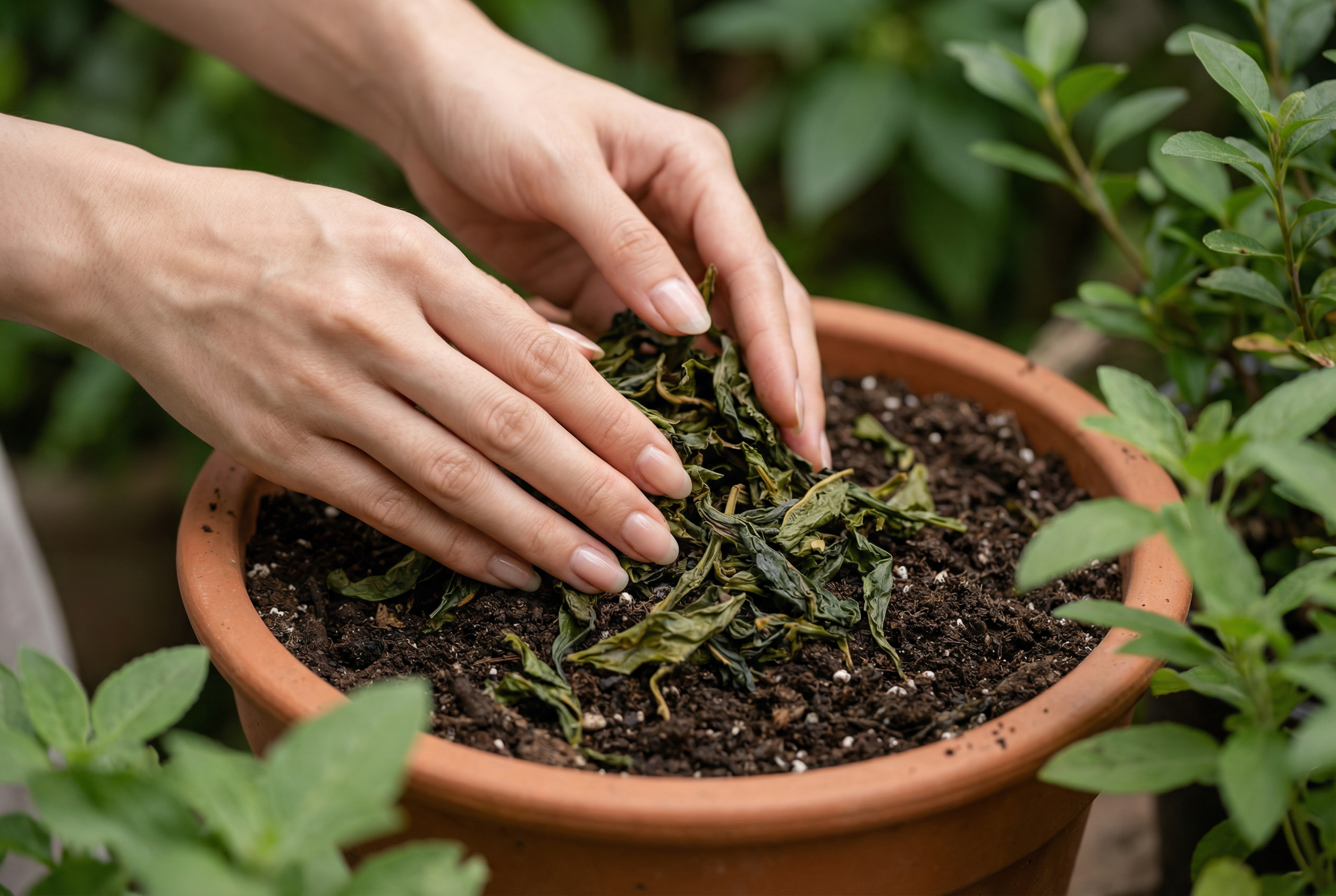
Sprinkling Directly into Potting Soil (Must Be Dried First)
Tea leaves must be fully dried before use. Spreading wet tea leaves directly on the soil surface can easily cause mold and may harm plants instead.
✓
Watering with Tea Liquor
Cooled, unsweetened tea liquor can be used as one of the watering options, commonly for the daily care of plants that prefer acidic soil.
✕
Not Recommended for Alkaline-Loving Plants
Plants such as cacti and succulents, which prefer alkaline environments, are generally not suitable for tea liquor or large amounts of tea leaves.
 5. Relaxation and Fragrance: Bringing Tea Aroma into Daily Life
Beyond practical uses, brewed tea leaves can also become a source of comfort and relaxation in daily life.
CALM 01
Tea-Scented Pillow Sachet
Place dried tea leaves in a cotton pouch and tuck it into a pillowcase or clothing box. The tea aroma is gentler than artificial fragrance.
CALM 02
Warm Diffusion of Tea Aroma
Fully dried tea leaves can be placed in a heat-resistant dish and gently warmed indirectly so the aroma is released slowly. Oolong and heavily roasted teas are especially layered and rich.
CALM 03
Warm Steam for the Hands
After brewing, while the teapot is still warm, place your hands near it to feel the steam. It is a simple way to warm your hands in winter.
FREQUENTLY ASKED
Frequently Asked Questions
Q Do brewed tea leaves still have nutrients?
Yes, but most water-soluble compounds have already been released during brewing. The remaining tea leaves still retain fiber and some compounds, making them more suitable for practical reuse in daily life, while their nutritional value for direct consumption is limited.
Q Can tea leaves be used directly for gardening?
It is not recommended to use them while still wet. Tea leaves should be dried first before being sprinkled on the soil surface or mixed into soil. Wet tea leaves on the soil surface can easily grow mold. A safer method is to compost them together with kitchen scraps first, then use them after decomposition.
Q Which types of tea leaves are best suited for reuse?
Different tea types have different aroma and flavor characteristics, so the most suitable reuse methods also vary slightly. If aroma is your priority, more heavily roasted teas are better suited for sachets or warm diffusion purposes.
DISCOVER THE FINEST TEA
Good tea should never be wasted—from the first brew to the very last leaf
BESTEA’s Taiwanese high-mountain loose-leaf tea carries its value beyond the cup, extending from brewing to tea leaf reuse in daily life.
KEEP READING
You May Also Like


