The first time you brew tea, it turns out bitter and astringent—does that mean the tea is poor quality, or is something wrong with the brewing method? Most of the time, it is the brewing method. This article clearly explains the sources of bitterness and astringency, along with ways to fix them, so your very next brew can already improve.
CONTENTS
Key Points of This Article
1. Common sources of bitterness and astringency in tea
2. Three key factors that affect bitterness and astringency
3. Is bitterness and astringency normal, or a problem?
4. Five ways to reduce bitterness and astringency
Common Sources of Bitterness and Astringency in Tea
Bitterness and astringency in tea are often related to several natural compounds:
Source of Astringency
Catechins
These are usually retained in greater amounts in more lightly fermented teas and are one of the main sources of astringency.
Source of Bitterness
Caffeine
The content is usually higher in tender buds; the higher the water temperature and the longer the steeping time, the more it is released.
Mild Bitterness and Astringency
Tea Saponins
Present in small amounts, they are also one of the reasons tea liquor foams; their overall impact is usually minor.
High-mountain tea often gives the impression of having lower bitterness and astringency and a gentler mouthfeel, which is related to its growing environment, cultivar, and processing.
View alpine oolong teas → Three Key Factors That Affect Bitterness and Astringency in Tea Liquor
Large-leaf cultivars usually bring out bitterness and astringency more easily; small-leaf oolong cultivars (such as Taiwan high-mountain tea) tend to give a sweeter and gentler impression. If you are especially sensitive to bitterness and astringency, choosing small-leaf cultivars or high-elevation teas will usually make the tea easier to drink.
2
Brewing Conditions (the biggest factor)
✕
Water temperature too high——Catechins and caffeine are released more quickly, making bitterness and astringency more obvious.
✕
Steeping time too long——The longer the steeping time, the more bitter and astringent compounds are usually released.
✕
Too much tea leaf used——When the concentration is too high, bitter and astringent compounds build up more easily, and the sweet aftertaste can be covered up.
Different water qualities also affect how tea liquor performs. If the water contains more minerals, the tea liquor may sometimes feel heavier, and the astringency may also become more noticeable. It is recommended to use filtered water or mineral water for brewing, as the result is usually more stable.
Is Bitterness and Astringency Normal or a Problem? How to Tell
Bitterness and astringency themselves are not the problem—what matters is what happens after them.
✓
Bitterness and astringency in good tea
There is bitterness and astringency at first sip, but they usually transform quickly into sweetness, with saliva stimulation in the mouth and a sweet return in the throat—this is a common layered expression of good tea.
△
Bitterness and astringency that need adjustment
If the bitterness and astringency stay too long and the mouth feels obviously dry, it usually means the brewing method needs adjustment, such as water that is too hot or steeping time that is too long.
✕
A problem with the tea itself
Only if bitterness and astringency remain unchanged even after adjusting the brewing method, and the tea smells stale or off, should you start considering tea quality as the issue.
How to Reduce Bitterness and Astringency in Tea Liquor? Five Practical Methods
Method 01
Lower the water temperature
For oolong tea, you can start by adjusting at 90–95°C; for green tea and white tea, you can begin at 80–85°C. The higher the water temperature, the faster bitter and astringent compounds are usually released.
Method 02
Shorten the steeping time
For the first infusion, try keeping it within 45–60 seconds, then extend gradually with each later infusion. Do not steep too long all at once before pouring it out.
Method 03
Use less tea leaf
If you are used to adding a lot of tea leaf, try reducing the amount a little first—the bitterness and astringency will usually decrease noticeably.
Method 04
Switch to cold brew
With cold brewing, bitter and astringent compounds are usually released more slowly, and the overall taste is often cleaner. Both high-mountain oolong and green tea are very suitable.
Method 05 (the most fundamental)
Choose high-mountain tea or heavily roasted tea
High-mountain tea and heavily roasted tea often give a gentler impression, making them easier to drink for many people who dislike bitterness and astringency. Adjusting from the source is often also the easiest way.
Tea that is naturally gentler makes drinking much easier
BESTEA’s high-mountain oolong and Si Ji Chun usually have a gentler flavor and a more obvious sweet aftertaste, making them easier to drink for many people who dislike bitterness and astringency.
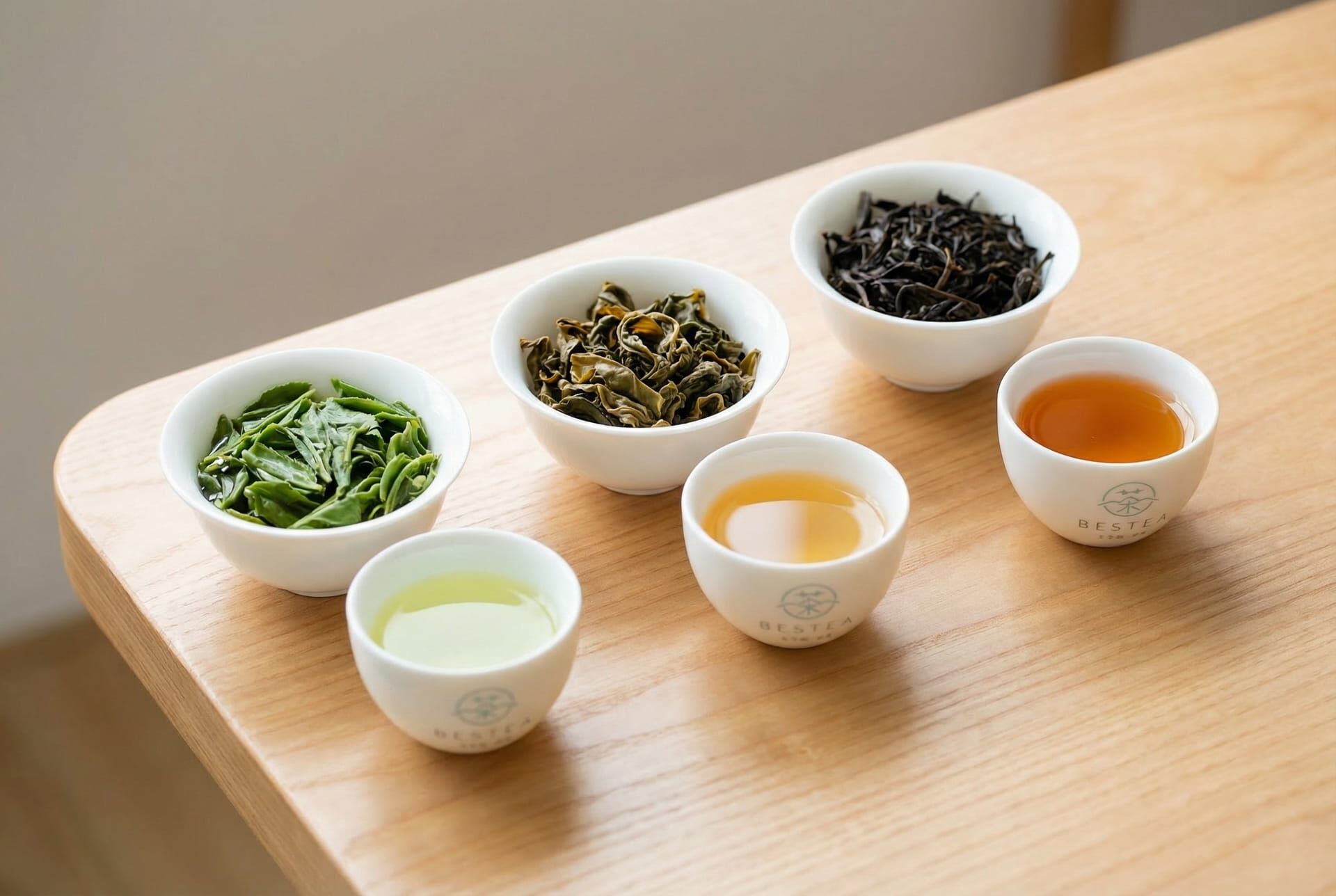 Bitterness does not mean poor quality: learn to appreciate the layers of tea
Moderate bitterness and astringency are part of the flavor structure of good tea. In good tea, the bitterness usually turns into sweetness very quickly, and the astringency gradually becomes saliva stimulation—this layered feeling of “bitterness turning into sweetness” is exactly why many people fall in love with tea.
If the tea you brew tastes overly bitter and astringent, adjust the water temperature and steeping time first. Most problems can be improved that way. The tea itself may not be the issue.
FREQUENTLY ASKED
Frequently Asked Questions
Q Why is green tea more likely to be astringent than black tea?
Green tea is an unfermented tea and retains more catechins, so its astringency is usually more obvious. Black tea goes through a fuller oxidation process, so its overall mouthfeel is usually gentler and rounder.
Q Does tea become more bitter and astringent the longer it is steeped?
Usually yes. The longer the steeping time, the more bitter and astringent compounds are usually released—especially after the time gets longer, the bitterness and astringency will become more obvious. It is recommended to keep the first infusion within 60 seconds, then extend each later infusion gradually.
Q Is there any tea that has no bitterness or astringency at all?
Almost all teas contain trace amounts of bitter and astringent compounds, but cold brew tea, high-mountain oolong, and some white teas usually have lower bitterness and astringency, making them gentler options for many people.
BEST TEA MOMENTS
Bitterness and astringency are the beginning of tea, not the end
Brew it right, and they turn into a sweetness you will not forget. BESTEA’s high-mountain whole-leaf tea has a clear sweet aftertaste and rich layers that you can feel from the very first infusion.
KEEP READING
You May Also Like


