 Black tea contains less caffeine than coffee, but among teas it falls in the mid-to-high range. If you are considering replacing coffee with black tea, or wondering whether drinking black tea will affect your sleep, this article clearly explains the numbers and the recommendations.
CONTENTS
Key Points of This Article
1. Comparison of caffeine content between black tea and other beverages
2. The effects of caffeine on daily condition
3. Its relationship with sleep and mood
4. Drinking precautions
Comparison of Caffeine Content Between Black Tea and Other Beverages
The caffeine content of black tea usually ranges from 20–70 mg per cup (about 250ml), and may vary depending on steeping time, tea cultivar, and concentration. Below is a comparison of common beverages:
Beverage
Caffeine Content (per cup, about 250ml)
From the numbers, it is clear that black tea usually contains less caffeine than coffee. Its stimulating effect is also often gentler than coffee, making it an easier everyday choice for many people.
The Effect of Black Tea Caffeine on Daily Condition
Alertness and focus
✦
Caffeine works by temporarily blocking the signals that make the brain feel tired, helping you stay awake and focused.
✦
The stimulating effect of black tea is usually gentler than coffee, making it suitable for mornings or afternoons when you need to stay sharp but do not want to feel overly wired.
✦
The L-theanine in black tea is often believed to make the stimulating feeling feel smoother.
May affect sleep
⚠
Even though its caffeine content is lower, it is still recommended to avoid drinking it within a few hours before sleep, especially for people who are sensitive to caffeine.
⚠
If you still want to drink tea in the evening, it is recommended to switch to lower-caffeine teas such as Si Ji Chun or oolong tea.
Suggestions for caffeine-sensitive people
Excessive caffeine intake may cause heart palpitations, trembling, or anxiety, and the effect can be more noticeable for sensitive people. It is recommended to start with a small amount and then adjust your drinking frequency and strength after observing your body’s response.
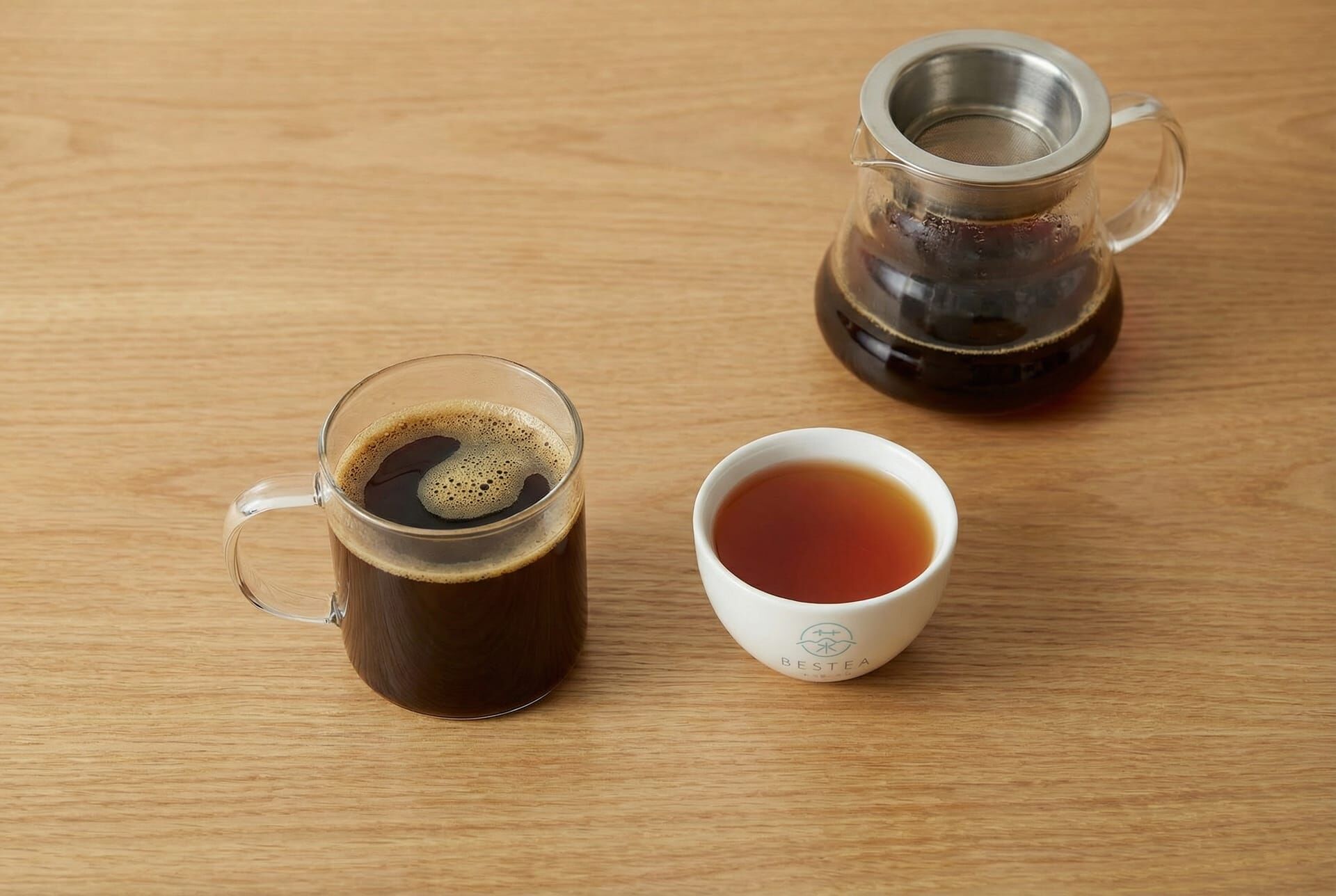 Black Tea Caffeine, Sleep, and Mood
Alertness
Helps maintain your condition
Caffeine is often used to help improve alertness and maintain wakefulness.
Sleep
Avoid drinking it in the evening
The effect may not be obvious for everyone, but reducing intake in the evening is still recommended. Sensitive individuals may consider switching to lower-caffeine teas after 3 p.m.
Mood
The feeling is usually smoother
Some people feel that the stimulating effect of black tea is smoother than coffee, though the actual experience still varies by individual constitution.
Note
Individual differences are obvious
Whether it suits you and how much feels comfortable should still be based on your own experience, and not rely too heavily on a single standard.
The above is for general health knowledge reference and is not medical advice. If you have specific health concerns, please consult a medical professional.
Gentle refreshment starts with a good cup of black tea
BESTEA carefully selects Taiwanese Sun Moon Lake Ruby and Lishan black tea. With rich tea liquor and a long sweet aftertaste, they are options many people consider when replacing coffee in daily life.
Precautions When Drinking Black Tea
Adjust according to personal tolerance
For first-time drinkers or those sensitive to caffeine, it is recommended to start with a lighter brew—reducing the amount of tea leaves or shortening the steeping time can both effectively lower the amount of caffeine released.
Avoid excessive intake at night
It is recommended to avoid drinking it within 4 hours before bedtime. For people who are especially sensitive to caffeine, switching to lower-caffeine teas after 3 p.m. may already be worth considering.
Not suitable on an empty stomach
Drinking tea on an empty stomach can easily irritate the stomach lining, so it is recommended to drink it with snacks or after meals, which is gentler on the digestive system.
FREQUENTLY ASKED
Frequently Asked Questions
Q Is the caffeine content of black tea high?
It is lower than coffee, but within the tea category it falls in the mid-to-high range. Black tea contains about 40–70 mg of caffeine per cup (about 250ml), roughly half that of coffee. With the same black tea, the stronger the brew and the longer the steeping time, the more caffeine is released.
Q Does caffeine affect health?
Moderate consumption is usually not a problem, but excessive intake may cause heart palpitations, insomnia, or stomach discomfort. For the average adult, a daily total intake of around 400mg is often used as a reference, though it should still be adjusted according to individual constitution and drinking habits.
Q When is black tea not recommended?
It is recommended to avoid drinking it within 4 hours before bedtime, and it is also not recommended on an empty stomach. For people sensitive to caffeine, lower-caffeine teas such as Si Ji Chun or lightly roasted oolong may be a better choice after 3 p.m.
Q Where can I buy high-quality Taiwanese black tea?
BESTEA offers a variety of Taiwanese black teas, including Sun Moon Lake Ruby, Lishan black tea, and Huagang black tea, and also provides SGS inspection information and origin details.
BESTEA — GENTLE ENERGY
Start a gently clear and awakened day with a cup of black tea
Taiwanese Sun Moon Lake Ruby and Lishan black tea are rich and full-bodied with a lingering sweet aftertaste, making them options many people consider when replacing coffee in daily life. SGS inspection information and origin details are also provided.
“Black tea is a relatively gentle and well-rounded source of caffeine—if you want to feel awake without becoming overly stimulated, black tea is often just the right answer.”
KEEP READING
You May Also Like


