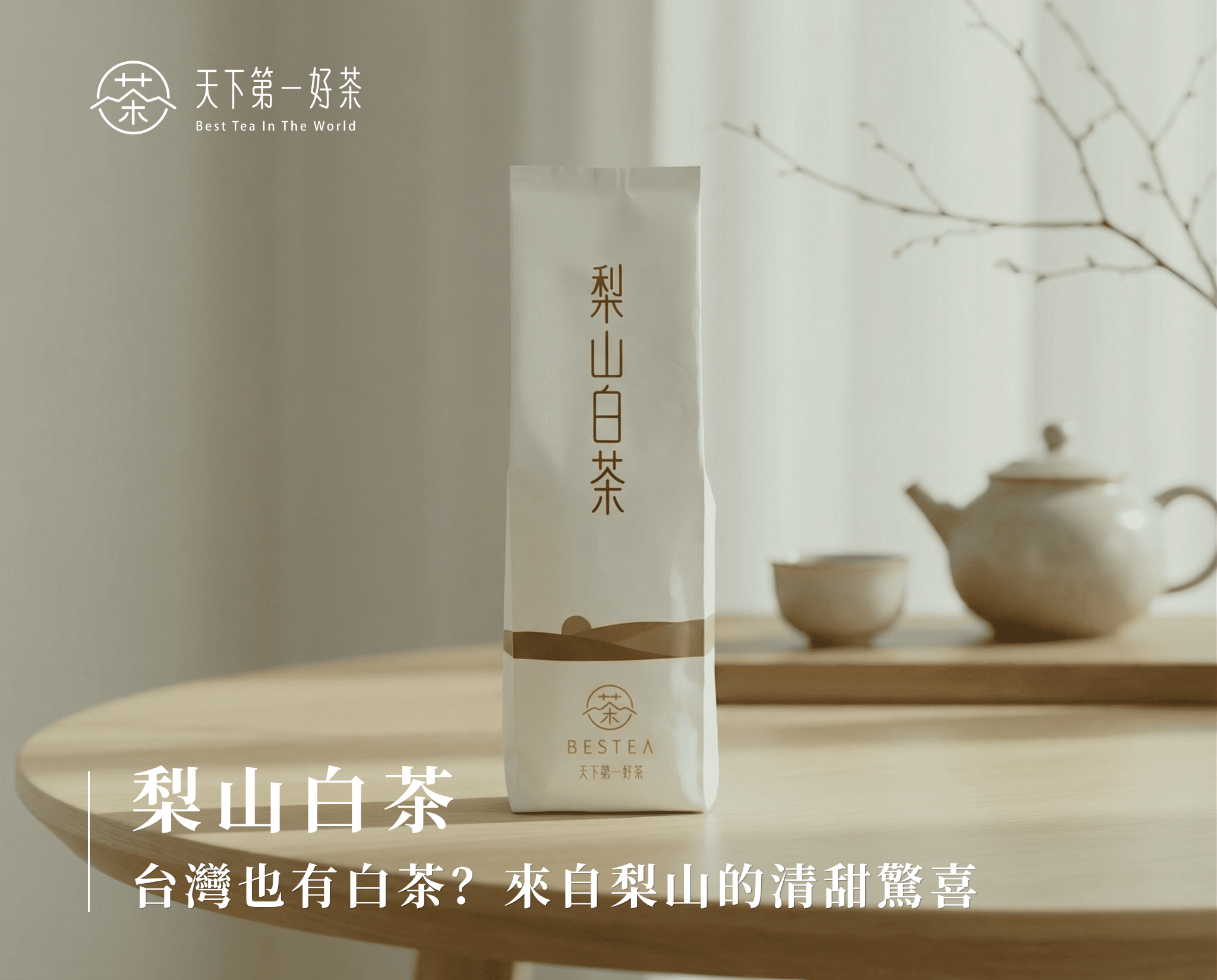
 Lishan white tea is not an ordinary white tea. It is made from winter buds of Qing Xin Oolong grown in the Huagang tea region at an altitude of 2400 meters. The entire process involves no pan-firing and no rolling, relying only on sun withering and long indoor air-drying to naturally develop its aroma. The first sip brings the clean sweetness of liquid rock sugar, the middle reveals a light plum-fruit aroma, and the finish leaves behind a delicate honey note—this level of complexity is rare among other white teas.
BESTEA Lishan White Tea
📍 Lishan Huagang · Elevation 2400m
🌿 Cultivar: Qing Xin Oolong winter buds
☁️ No pan-firing, no rolling throughout
✦ Light oxidation 20% · Extremely limited annual yield
CONTENTS
Key Points of This Article
1. What is Taiwanese white tea?
2. The production craft of Lishan white tea
3. Flavor characteristics · Brewing suggestions
4. The development history of Taiwanese white tea · Storage methods
BESTEA Lishan white tea is picked from winter buds in the Huagang high-mountain tea region at 2400m, with no pan-firing and no rolling throughout the process, and an extremely limited annual yield.
Shop Lishan white tea → What Is Taiwanese White Tea?
White tea is one of the six major tea categories and has the least processing, with “no pan-firing and no rolling” as its core craft. After picking, it only goes through withering and drying, allowing the tea leaves to slowly transform in a natural environment. Because the process is so minimal, the quality of the raw material and the environmental conditions determine everything: the cultivar, altitude, and harvest season all directly show up in the finished tea’s aroma and taste.
At present, the best Taiwanese white teas are mainly produced in high-altitude tea regions such as Lishan and Alishan. The cool climate and strong day-night temperature differences make the aroma of white tea brighter and its sweetness more pronounced.
The Production Craft of Lishan White Tea
The making of Lishan white tea emphasizes “subtraction”—the less interference, the more the original mountain character is preserved.
1
Winter-bud picking
Fresh tender buds and leaves are picked only during winter, with an extremely limited yield. Winter buds grow slowly and accumulate rich sugars, which are the fundamental source of white tea’s sweet finish.
2
Sun withering
After picking, the leaves are spread out under sunlight to wither naturally, allowing moisture to slowly evaporate and aroma compounds to begin transforming.
3
Long indoor air-drying
The leaves are then moved indoors to a ventilated, cool place for continued shade-drying for about five days, with no heating and no rolling throughout, so the tea leaves retain their complete original shape.
4
Hand selection
Tea leaves with complete appearance and prominent white down are selected by hand to ensure a pure and consistent finished product.
The biggest challenge in the whole process is not technique, but waiting—waiting for sunlight, waiting for time, and waiting for the weather to cooperate. This is also why every batch of Lishan white tea is produced in such a limited quantity.
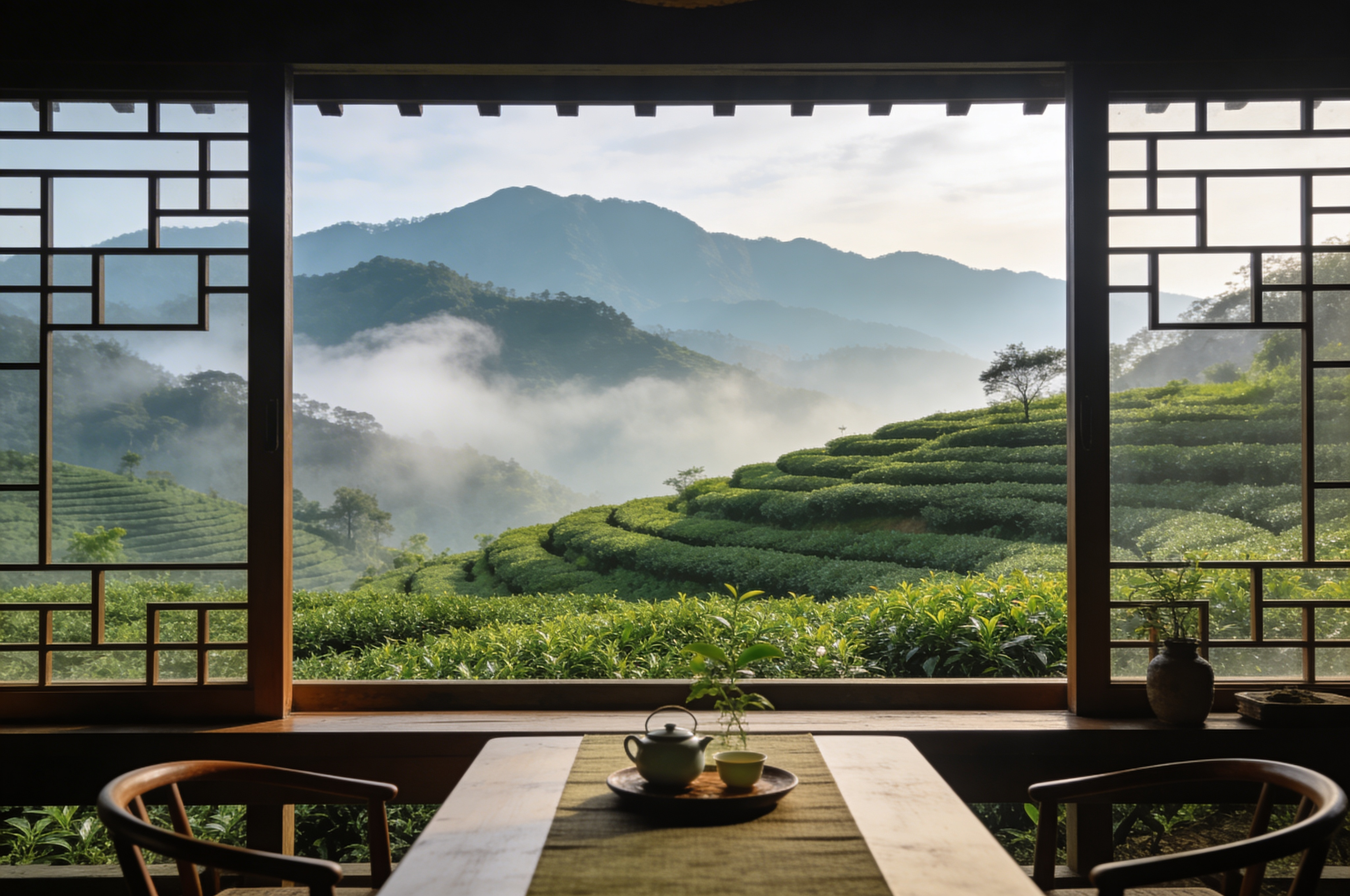 The Flavor Characteristics of Lishan White Tea
BESTEA Lishan white tea uses Qing Xin Oolong winter buds from Huagang, Lishan, at 2400 meters, with 20% light oxidation, presenting three layers of flavor:
🍬
Opening
Rock sugar-like sweetness
Gentle and never cloying, it melts across the palate like liquid sweetness—this is the natural expression of the sugar accumulation in Lishan winter buds.
🍑
Middle
Elegant plum-fruit aroma
Fresh yet deep, it slowly unfolds, shaped together by the cool high-mountain environment and sun withering.
🍯
Finish
Delicate honey notes
The sweet aftertaste lingers for a long time, and even after drinking, the throat still holds a trace of aroma—this is the part of Lishan white tea people find hardest to forget.
Lishan Huagang 2400m · Winter-bud limited · Extremely rare annual yield
BESTEA Lishan white tea is picked from the Huagang tea region at 2400 meters, using Qing Xin Oolong winter buds, with no pan-firing and no rolling throughout the process, SGS-tested pesticide-free, and produced in limited quantities with each batch. If you love white tea, it is recommended to buy when you see it in stock.
Brewing and Tasting Taiwanese White Tea
The aroma of white tea is delicate, and the brewing method directly affects whether you can taste its full layers. The following are the recommended brewing parameters for Lishan white tea:
Water Temperature
80–85°C
Avoid high heat that can damage the floral-fruit aroma
First Infusion
60sec
Extend each infusion by 10–20 seconds
Tea-to-Water Ratio
1:30–50
Can be brewed 4–5 times
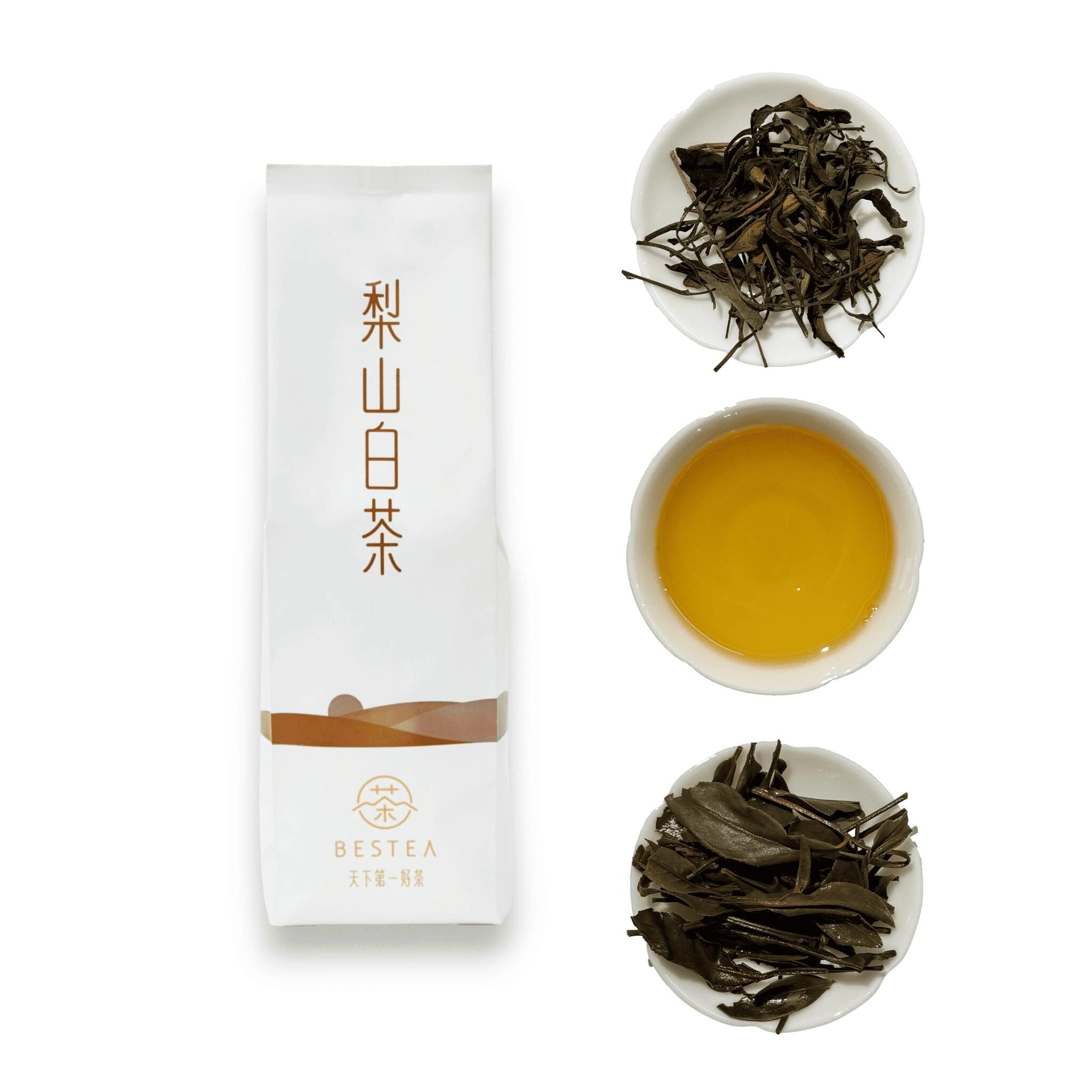
Recommended teaware: White porcelain or a glass pot is best, as it lets you clearly observe the golden liquor color without interfering with the aroma. The second to third infusions usually show the fullest and richest aroma, so it is recommended to smell first before sipping.
The Development History of Taiwanese White Tea
Late 19th century
Tea-making techniques from Fujian were introduced into Taiwan, and trial production of white tea began to emerge.
Early 20th century
Small-scale commercial production began using handmade methods, mainly exported to Japan and Western markets.
Mid-20th century
Taiwanese tea farmers began trial production of white tea using local high-mountain tea cultivars such as Qing Xin Oolong, gradually forming a unique Taiwanese style.
Today
White tea from high-altitude production regions such as Lishan and Alishan has become one of the representative forms of premium Taiwanese tea because of its rarity and layered flavor.
How to Store Taiwanese White Tea
Environment
Keep it in a dry, cool, odor-free place, away from direct sunlight and humidity.
Container
Store it in a sealed container and avoid placing it together with strongly scented items—white tea has a light aroma and easily absorbs outside odors.
Timeframe
After opening, it is recommended to finish it within 3 months. Unopened, it can be stored for about 1–2 years. Refrigeration is not necessary—cold storage can cause the tea to absorb moisture, which may negatively affect the aroma.
FREQUENTLY ASKED
Frequently Asked Questions
Q What is the difference between Lishan white tea and ordinary white tea?
Lishan white tea is picked from the Huagang tea region at 2400 meters and uses Qing Xin Oolong winter buds, together with the traditional craft of no pan-firing and no rolling throughout the process. Compared with ordinary white tea, Lishan white tea has richer aromatic layers—with rock sugar sweetness, plum-fruit aroma, and honey finish interwoven in three levels, a character difficult for low-altitude white tea to replicate.
Q When is Lishan white tea harvested?
Lishan white tea uses winter buds and is produced only during the short harvest window each winter. Winter buds grow slowly and accumulate rich sugars, which are the fundamental source of white tea’s sweet finish, but this also makes the annual yield extremely limited, with only a small amount of stock in each batch.
Q How should Lishan white tea be stored to maintain its quality?
Keep it in a dry, cool place and store it in a sealed container to avoid absorbing odors. After opening, it is recommended to finish it within 3 months. White tea does not need refrigeration—room-temperature sealed storage is enough, and refrigerated conditions can easily cause the tea to absorb moisture, which may affect the aroma instead.
Q What health benefits does Lishan white tea have?
Because white tea goes through very little processing, its tea polyphenols and theanine are relatively well preserved, giving it some supportive antioxidant effect. Its tea nature is gentle and less likely to irritate the stomach, making it suitable for drinking in the morning or afternoon. The above is general health knowledge reference; if you have specific health concerns, it is recommended to consult a medical professional.
BESTEA — Premium White Tea
Winter-bud limited, only once a year
Lishan Huagang 2400m · Qing Xin Oolong winter buds · traditional no-pan-firing, no-rolling craft. Each batch is limited in quantity, and white tea lovers are advised to buy when they see it in stock.
KEEP READING
You May Also Like


