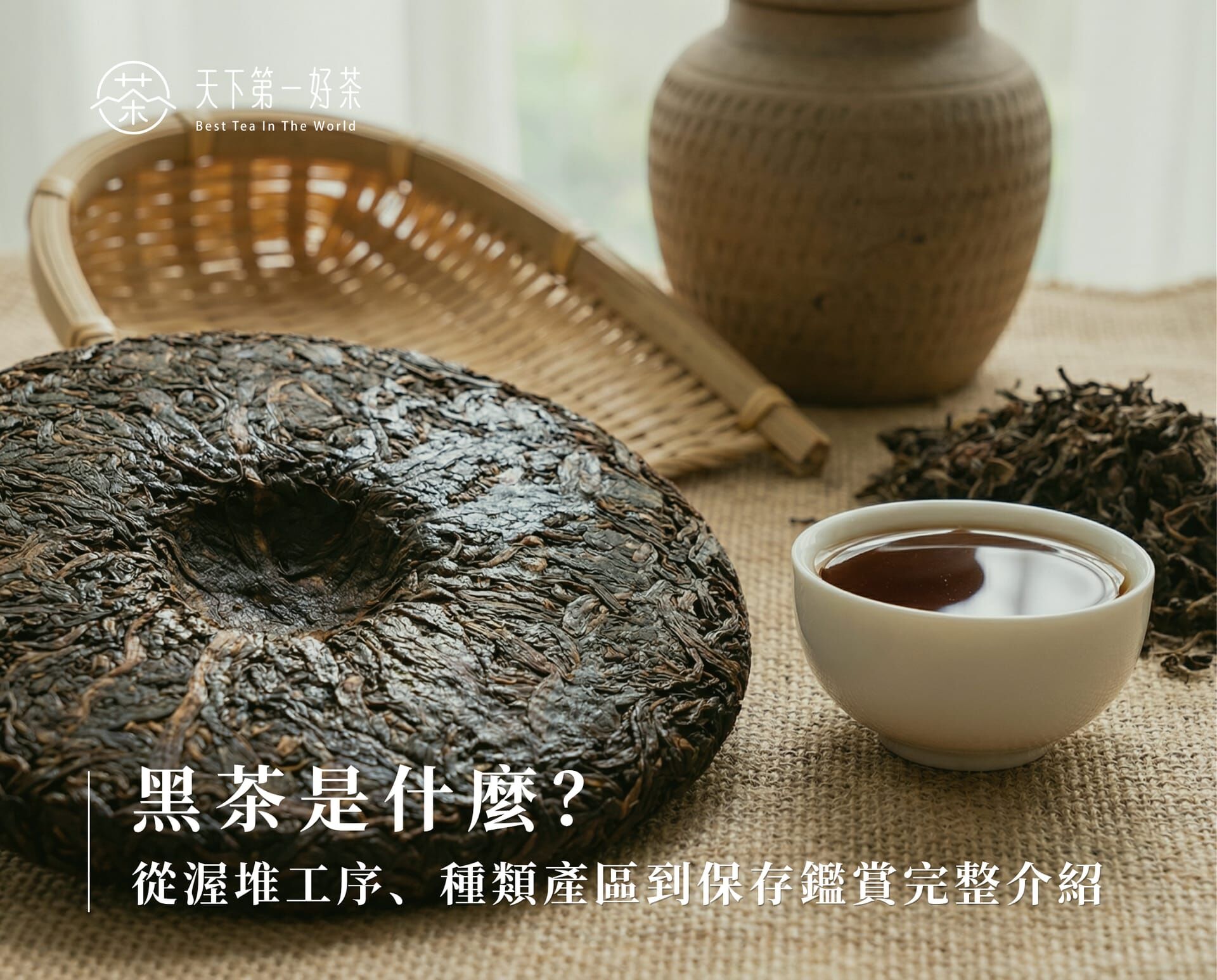
 Dark tea is the most unique category among China's six major tea types — a post-fermented tea renowned for its microbial pile-fermentation process and extended aging. Unlike other teas, dark tea's flavor isn't locked in during processing — it's slowly generated over time. From the ancient Tea Horse Road to modern tea tables, this "better with age" characteristic gives dark tea a truly distinctive place in tea culture.
CONTENTS
Key Highlights
1. Production Process
2. Types & Origins
3. Storage & Appreciation
4. Health Benefits & Cultural History
Dark Tea Production Process
Dark tea is a post-fermented tea with a complex and distinctive production process. The main steps are: Fixation → Rolling → Pile Fermentation → Drying → Aging.
1
Fixation (Kill-Green)
High heat suppresses enzyme activity, halting enzymatic oxidation and preserving the tea's fundamental quality.
2
Rolling
Breaks down the leaf cell structure, releasing tea juices, shaping the leaves, and preparing them for subsequent fermentation.
3
Pile Fermentation (Post-Fermentation)
The Soul of the Process
Tea leaves are piled in a warm, humid environment, allowing microorganisms (primarily molds and bacteria) to participate in transformation, producing the distinctive aged aroma and smooth mouthfeel. This process can last several weeks.
4
Drying
Removes excess moisture, locks in aroma and flavor, and brings the tea into a stable state.
5
Aging
The longer the aging, the richer and more mellow the tea becomes, with ever-deepening flavor layers — this is why dark tea is often called "a drinkable antique."
Dark Tea Types & Origins
The most iconic dark tea, divided into raw (sheng) and ripe (shu). Raw Pu-erh has a fresh aroma with bitter undertones that transforms into honey fragrance with aging. Ripe Pu-erh undergoes artificial pile fermentation, producing a rich aged aroma and silky mouthfeel — an excellent entry point into dark tea.
Famous for containing "golden flowers" (Eurotium cristatum fungus). The liquor is deep red, bright, and translucent, with a mellow, smooth mouthfeel and a distinctive fungal aroma.
Aged in bamboo baskets with distinctive woody and betel nut aromas. Suitable for long-term storage, it is a traditional beverage among the Malaysian Chinese diaspora.
Compressed into brick form, with a "flowering" process that cultivates golden flower fungus within the brick. The liquor is golden-red and translucent. Historically, it was a vital trade tea for China's northwestern frontier.
Guangdong
Guangyun Gong Bing
Compressed into cake form, blending Yunnan tea material with Guangdong processing techniques. After aging, it develops a warm, mellow aroma — another noteworthy post-fermented tea worth knowing.
Dark Tea Storage & Appreciation
Storage Environment
Cool, Dry · Ventilated, Away from Light
Keep away from moisture and strong odors. Avoid refrigeration — cold storage causes tea to absorb moisture and interrupts the natural aging process.
Storage Containers
Ceramic Jars · Bamboo Baskets · Stainless Steel Cans
Avoid plastic containers — plastic odors interfere with dark tea's delicate aged aroma, with more noticeable effects over long-term storage.
Storage Duration
Better with Age
Some premium dark teas can be stored for decades, with flavor continuously evolving over the years — this is why tea enthusiasts never tire of collecting aged teas.
Appreciation Guide
Dark Brown & Lustrous · Red, Bright & Translucent
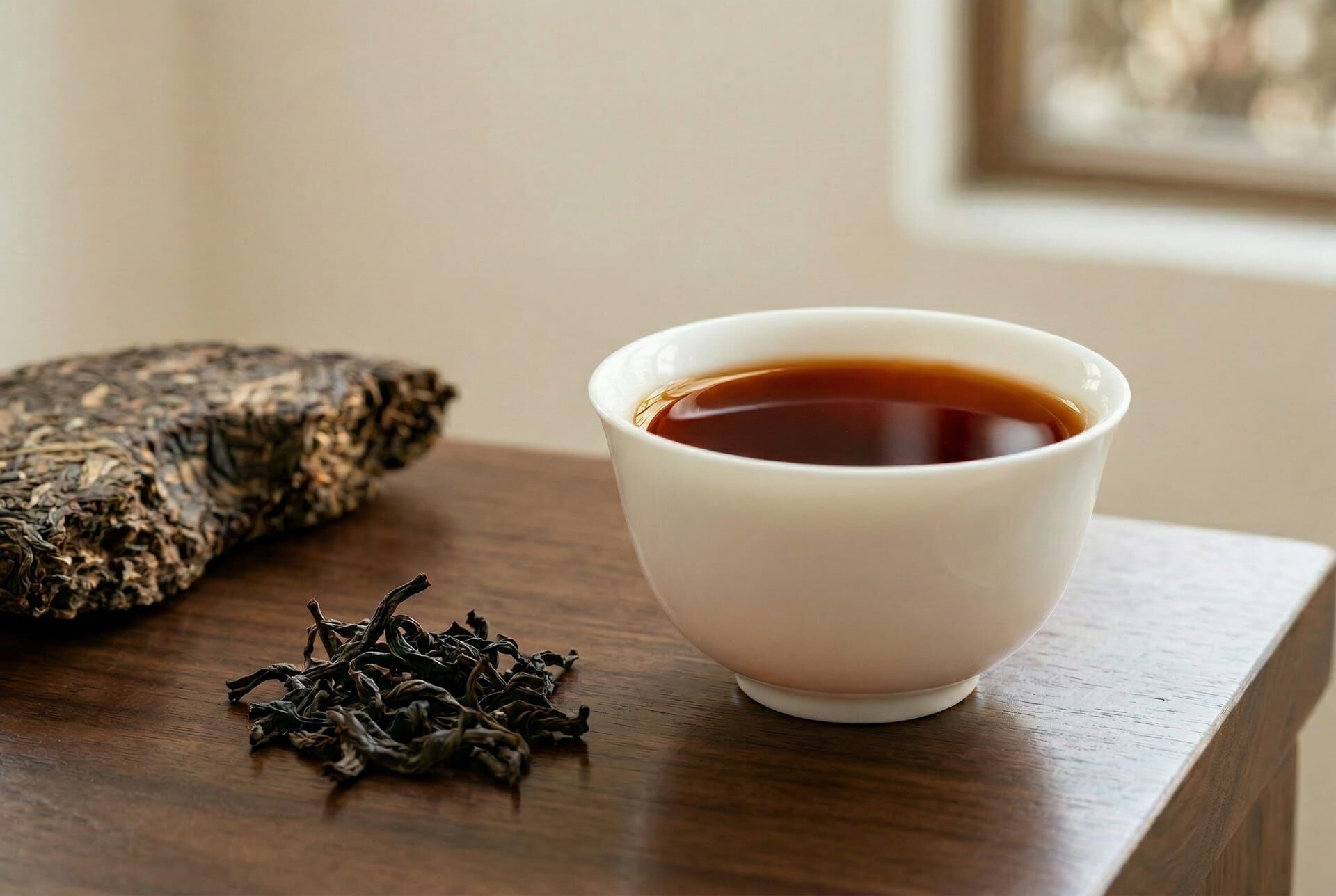
The leaves should appear dark brown with a healthy sheen. Aroma carries aged, woody, or fruity notes — off odors typically indicate improper storage. The liquor should be red, bright, and translucent with a thick, smooth mouthfeel and a long-lasting sweet finish.
Love Rich, Full-Bodied Tea? Taiwan Roasted Oolong Is Worth a Try
BESTEA's Taiwan roasted oolong offers the same deep roasted aroma and smooth throat feel — a rich-bodied Taiwanese tea shipped directly from high-mountain tea gardens.
Dark Tea Health Benefits
Antioxidant
Tea polyphenols help combat free radicals — the wellness foundation of daily tea drinking.
Digestive Aid
Dark tea has a gentle character. Drinking after meals helps break down fats and ease digestive burden — especially suited for those with richer diets.
Lipid Support
Some studies suggest dark tea may offer supportive effects on lipid metabolism, though individual results vary and this should not be considered medical advice.
Gentle Alertness
Moderate caffeine content provides gentle, sustained alertness — less likely to cause jitters or sleep disruption.
Relaxation
Its gentle character and calming aged aroma make it suitable for drinking before bed or during moments when relaxation is needed.
The above information is general health knowledge for reference only. Please consult a healthcare professional if you have specific health concerns.
 Dark Tea Culture & History
Dark tea originated in China's Tang Dynasty and flourished during the Ming and Qing Dynasties. It was one of the most important trade teas on the "Tea Horse Road." At that time, tea traveled from Yunnan and Sichuan through Tibet and the Yunnan-Guizhou Plateau to the frontier, exchanged for horses and hides — dark tea became an indispensable commodity on this ancient trade route due to its durability in storage and transport.
For nomadic peoples of the frontier, dark tea was more than just a beverage — it was an essential source of vitamins and minerals found in tea. The proverb "One can go three days without food, but not a single day without tea" reflects the vital role dark tea played in frontier life.
"One can go three days without food, but not a single day without tea."
— Northwestern frontier proverb, reflecting the importance of dark tea in nomadic culture
Further reading: Wikipedia — Dark Tea →
Q How is dark tea different from black tea?
The key difference lies in the fermentation method and duration. Black tea is a fully oxidized tea, primarily using enzymatic oxidation that's typically completed within days — sweet and smooth. Dark tea is a post-fermented tea, centered on microbial transformation that takes weeks to years, producing aged, full-bodied flavors and stable aromas that continue to evolve over time.
Q How should dark tea be stored?
The basic principles are: cool, dry, ventilated, and away from light. Use ceramic jars or stainless steel cans for storage — avoid plastic containers and refrigeration. Dark tea can continue to age under proper conditions without refrigeration — cold storage actually causes moisture absorption and interrupts the aging process.
Q What are the health benefits of dark tea?
Dark tea is rich in polyphenols with antioxidant properties. Drinking after meals aids digestion and fat breakdown. Some studies suggest supportive effects on lipid management. Overall, dark tea has a gentle character suited for daily drinking, but it should not be considered a treatment for any condition. Please consult a doctor if you have specific health concerns.
Q Interested in post-fermented tea — does BESTEA have similar offerings?
BESTEA currently focuses on Taiwan high-mountain tea and does not carry Pu-erh or dark tea products. However, Taiwan's roasted oolong and Muzha Tieguanyin offer similarly deep roasted aromas and smooth throat feel — Taiwanese teas "with depth" that are well-suited for those who enjoy rich, mellow flavors.
THE ART OF TEA
Brew a Pot of Fine Tea, Savor the Richness of Time
From Taiwan's high mountains to your tea table, BESTEA carefully selects every leaf, letting you appreciate the depth of tea culture in your daily life.
"Dark tea is a work of time — the microbial transformation of pile fermentation, the accumulated years of aging. Every step deepens and enriches the flavor. To understand dark tea is to understand why tea is worth waiting for."
KEEP READING
You Might Also Enjoy


