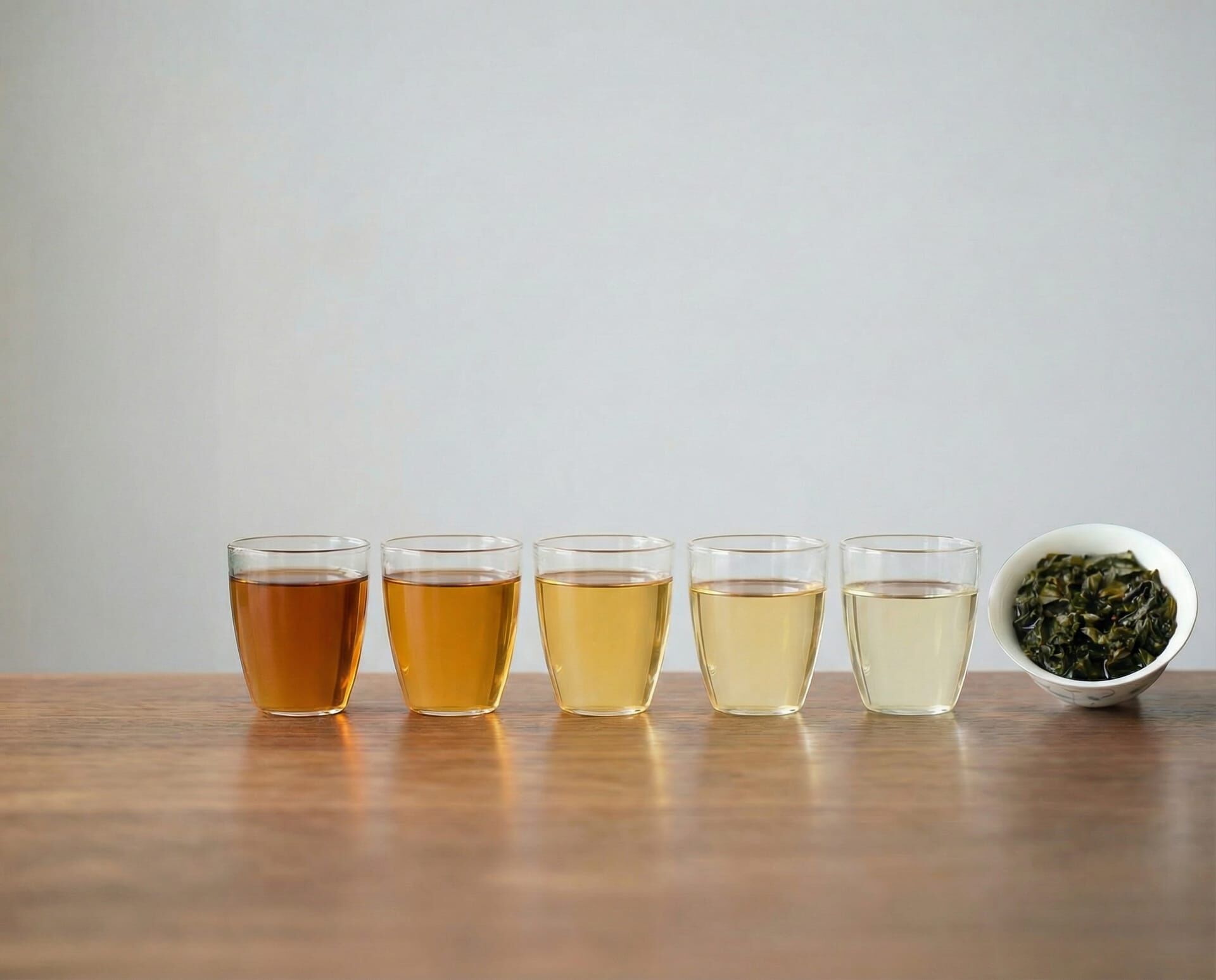
 Tea leaves contain a variety of compounds including tea polyphenols, vitamins, minerals, caffeine, and amino acids — making tea a natural everyday beverage. Understanding the composition of tea not only helps you choose the right tea for yourself, but also lets you enjoy every cup more mindfully.
CONTENTS
Key Highlights
1. Key Compounds & Their Functions
2. Tea Polyphenols: Antioxidant Properties & Levels by Tea Type
3. Vitamins & Minerals
4. Caffeine & L-Theanine
Key Compounds & Their Functions
Antioxidant Core
Tea Polyphenols
Including catechins and theaflavins — the most important antioxidant compounds in tea.
Daily Support
Vitamins C · E · K
Natural antioxidant compounds that offer supportive benefits for daily wellness.
Natural Minerals
Calcium · Magnesium · Potassium · Zinc
One of the natural sources for everyday mineral intake.
Gentle Alertness
Caffeine
Less likely to cause jitters than coffee, with a gentle and sustained energizing effect.
Relaxation & Calm
L-Theanine · Aromatic Compounds
Gives tea its distinctive flavor. L-theanine helps promote relaxation and smooths out the stimulating effects of caffeine.
Freshness & Protection
Tannins
Contributes bitterness, astringency, and sweet aftertaste layers, while also possessing natural preservative properties that help maintain tea quality.
Antioxidant Properties of Tea Polyphenols
✦
Helps neutralize free radicals with supportive effects against cellular oxidation.
✦
Drinking after meals helps cut through richness and supports digestion.
✦
Some studies suggest supportive effects on lipid metabolism, but individual results vary significantly — personal experience should be the guide.
Tea polyphenol content varies by tea type (the lower the oxidation level, the more completely polyphenols are preserved):
Tea Type
Polyphenol Content (mg / 100ml)
Green Tea
30–100Highest · Unoxidized
Oolong Tea
20–60Semi-oxidized
White Tea
10–40Minimally processed
Black Tea
10–30Fully oxidized · More converted
The above is general health knowledge for reference only and does not constitute medical advice. Please consult a healthcare professional if you have specific health concerns.
Want to drink Taiwan high-mountain tea with well-preserved polyphenols? BESTEA ships directly from the source with guaranteed quality.
Explore All Teas → Vitamins & Minerals
Vitamin C
A natural antioxidant that helps support daily immune function.
Vitamin E
Offers supportive cell-protective properties.
Vitamin K
Plays a supportive role in blood clotting function.
Potassium · Magnesium
Minerals essential for maintaining normal nerve and muscle function.
Calcium · Iron
One of the natural sources for essential daily minerals. Note: tannins in tea may affect iron absorption — those with iron-deficiency anemia should avoid drinking large amounts of tea during meals.
Caffeine & L-Theanine
Caffeine and L-theanine in tea form a fascinating pairing: caffeine provides an alertness boost, while L-theanine offers a calming effect. Together, they make tea's energizing sensation steadier than pure caffeine — which is why drinking tea rarely produces the jittery feeling often associated with coffee.
☕ Caffeine
Temporarily blocks fatigue signals, keeping the brain alert and focused. Higher water temperature and longer steeping release more caffeine.
🍵 L-Theanine
Helps promote relaxation, smoothing out caffeine's stimulating effects for a steadier, longer-lasting alertness.
How to Control Caffeine Intake
The higher the water temperature, the longer the steeping time, and the more tea leaves used, the more caffeine is released. Keeping the first infusion under 1 minute can effectively reduce caffeine intake — especially important for those who are sensitive.
Drink Great Tea, Absorb Natural Goodness
BESTEA carefully selects Taiwan high-mountain teas rich in polyphenols, L-theanine, and natural minerals — SGS pesticide residue certified, with quality assured from the tea garden to your cup.
Q Does polyphenol content vary by tea type?
Yes, and the differences are significant. Green tea, being unoxidized, retains the most polyphenols (30–100 mg/100ml); oolong tea comes next; black tea, with the highest oxidation, has the most converted polyphenols (10–30 mg). White tea, though minimally processed, uses a high proportion of tender buds, so its polyphenol content is also quite substantial.
Q Are tea vitamins and minerals released during brewing?
Most compounds can be released through hot water brewing, including vitamin C, potassium, and magnesium. Brewing high-mountain oolong at 80–90°C is recommended — this preserves the aroma while allowing more complete release of beneficial compounds.
Q Does caffeine content depend on brewing method?
Very much so. The longer the steeping time, the higher the water temperature, and the more tea leaves used, the more caffeine is released. Keeping the first infusion to 50–60 seconds is recommended to effectively reduce caffeine intake — especially important for those sensitive to caffeine.
Q Which tea has the richest overall composition?
Different teas excel in different areas: for polyphenols, choose green tea or white tea; for the relaxing effects of L-theanine, high-mountain oolong accumulates more due to its unique growing environment; for gentle alertness without bitterness, Oriental Beauty Tea or oolong tea are ideal choices. Most importantly, choose pesticide-free tea so the compounds can be safely absorbed.
BESTEA — NATURE'S NUTRITION
Every Great Cup of Tea Is a Natural Boost of Nutrition
Rich in polyphenols, L-theanine, and minerals — BESTEA Taiwan high-mountain tea lets you absorb nature's wellness power with every sip. SGS pesticide residue certified for peace of mind.
KEEP READING
You Might Also Like


