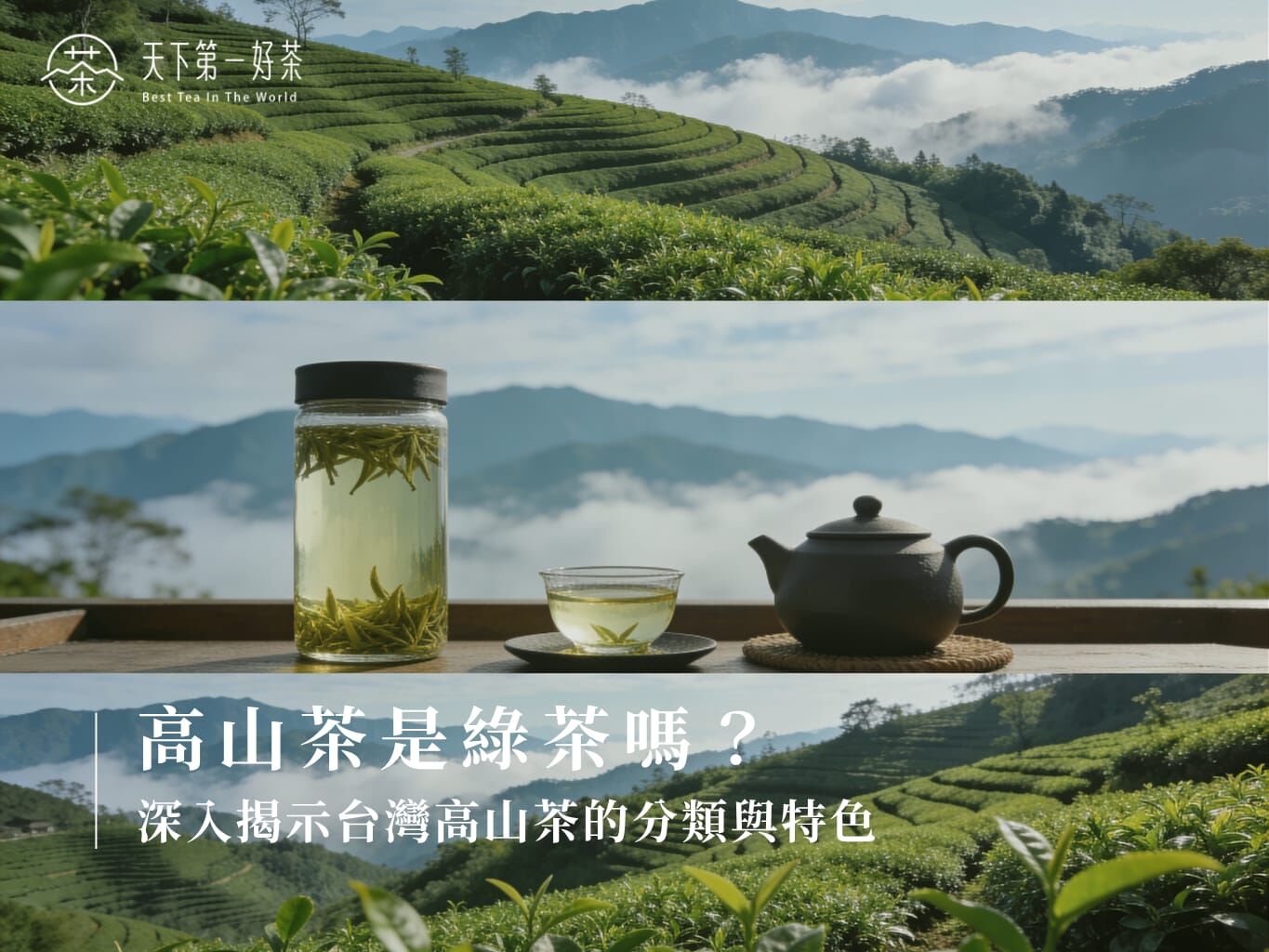
QUICK ANSWER
High-mountain tea is not green tea. High-mountain tea is not a tea classification, but a general term for tea produced in higher-altitude regions. Most Taiwanese high-mountain teas belong to partially oxidized oolong tea, and both their processing and flavor are clearly different from green tea.
CONTENTS
Key Points of This Article
1. What is high-mountain tea?
2. The key differences between high-mountain tea and green tea
3. The main varieties of Taiwanese high-mountain tea
4. Flavor characteristics and how to identify high-mountain tea
What Is High-Mountain Tea?
Definition
1000m+
A common definition in Taiwan
Tea Type
Oolong Tea
Mainly partially oxidized
Representative Regions
Alishan
Lishan
Dayuling
High-mountain tea generally refers to tea grown at elevations above 1000 meters. Taiwan’s main production regions include Alishan, Shanlinxi, Lishan, and Dayuling. These areas have large day-night temperature differences, misty surroundings, and shorter sunshine hours, which slow the growth of the tea trees and usually give high-mountain tea a more delicate aroma and richer layers.
High-Mountain Tea vs. Green Tea: The Key Differences at a Glance
The most fundamental difference between high-mountain tea and green tea lies in the processing method, and the processing method determines the degree of oxidation, which in turn affects the direction of aroma and taste.
Comparison Item
Taiwanese High-Mountain Tea
Green Tea
Tea Category
Oolong tea (partially oxidized)
Unoxidized tea
Oxidation Level
Partially oxidized tea
Unoxidized
Production Steps
Withering → Tossing → Oxidation → Fixation → Rolling → Roasting
Fixation → Rolling → Drying
Aroma Characteristics
Floral, fruity, honey-sweet aroma
Bean-like aroma, grassy aroma, sweet freshness
Taste
Smooth, mellow, long sweet aftertaste, usually lower bitterness and astringency
Fresh and lively, with a quicker sweet return
Liquor Color
Golden to amber, clear and bright
Emerald green to pale yellow, clear
Want to personally experience the flavor difference between high-mountain oolong and green tea? Trying them directly is the most intuitive way.
The Main Varieties of Taiwanese High-Mountain Tea
Qing Xin Oolong
One of Taiwan’s most classic high-mountain tea cultivars, with an elegant and delicate aroma, carrying clear floral notes and light honey fragrance. It is a common cultivar in Lishan, Dayuling, and Alishan.
Jin Xuan
With natural milky aroma and light floral notes, and a soft, sweet taste, it is a very beginner-friendly choice for Taiwanese high-mountain tea (TTES No. 12).
Si Ji Chun
With clear floral aroma, refreshing sweetness, and the ability to be harvested year-round, it is a tea that many people find very suitable for daily drinking.
Tsui Yu
Its aroma is bright and lifted, with a distinctive ginger lily fragrance. It has a more pronounced personality, and is often noticed by tea lovers seeking special flavor profiles.
Even the same cultivar can show different flavor expressions at different elevations and in different production regions—this is also one of the reasons Taiwanese high-mountain tea is so enjoyable to compare and explore.
Flavor Characteristics of High-Mountain Tea
Aroma
Rich and long-lasting
High-mountain tea usually carries more delicate floral and fruity aromas, and its aromatic expression is often more dimensional.
Taste
Sweet and less astringent
High-mountain tea often gives the impression of more obvious sweetness and lower bitterness and astringency.
Finish
Clear sweet aftertaste
The throat finish is long after drinking, and the sweetness continues to spread through the mouth—one of the most memorable traits of high-mountain tea.
Liquor Color
Clear golden tone
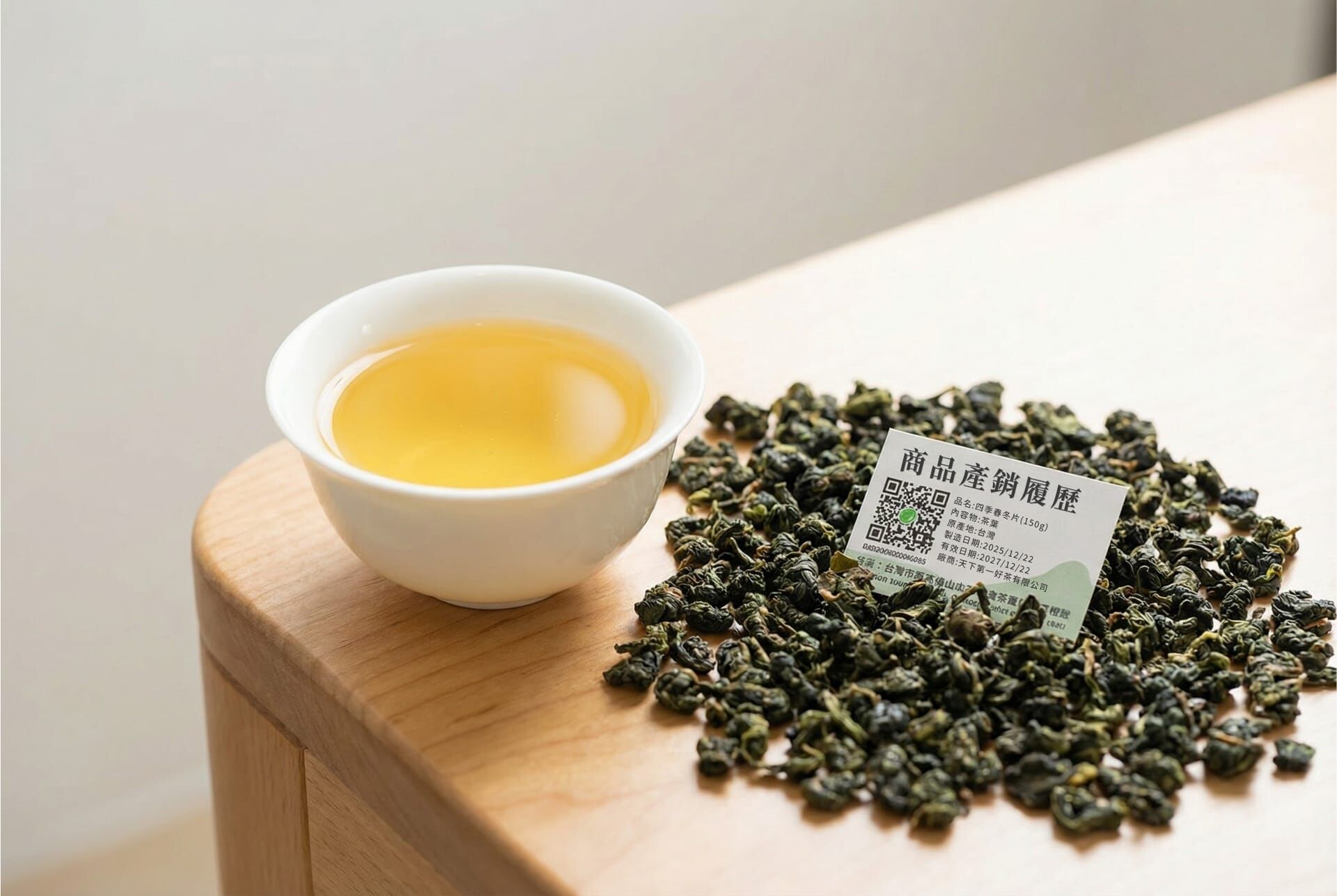
A tea liquor ranging from golden to amber that is clear and bright is a common visual sign when quality is stable.
 How to Identify High-Mountain Tea?
High-mountain tea commonly shows the following characteristics, but the most reliable way to judge it is still through the production-area information, altitude labeling, and inspection / traceability records:
Thick leaves
The leaf substance of high-mountain tea is usually thicker, and the leaf shape is also tighter.
Bright liquor
A clear, bright, and evenly colored tea liquor is a common sign when quality is stable.
Natural aroma
Floral and fruity aromas that emerge naturally, without being sharp or artificial, are often one of the directions tea lovers pay attention to when identifying tea.
Long sweet aftertaste
High-mountain tea commonly has a more lasting sweet aftertaste and finer flavor layers.
When purchasing, you can confirm the production-area label and tea garden altitude, and prioritize brands that provide traceability records or third-party inspection information.
Choosing high-mountain tea with traceability makes it more reassuring to drink
BESTEA provides production-area information, traceability records, and SGS inspection information, giving you a stronger basis when choosing tea.
FREQUENTLY ASKED
Frequently Asked Questions
Q What tea category does high-mountain tea belong to?
Most Taiwanese high-mountain tea belongs to oolong tea (partially oxidized tea), not green tea. “High-mountain tea” describes the altitude of the production area, not the tea classification—on the same mountain, oolong tea, black tea, or white tea may all be grown, but Taiwan’s most representative type is high-mountain oolong tea.
Q What is the difference between high-mountain tea and lowland tea?
The main differences are reflected in aroma, mouthfeel, and the impression of sweet aftertaste. High-mountain tea usually has a more delicate aroma, a softer mouthfeel, and a more lasting sweet aftertaste.
Q How can you confirm that the high-mountain tea you bought is authentic?
You can judge from three directions: first, confirm the production area and altitude labeling; second, prioritize brands with traceability records or SGS inspection information; third, when tasting, pay attention to whether the aroma feels natural and whether the sweet aftertaste lasts. If you want a more accurate judgment, it is still best to return to the source information and the transparency of the brand.
TASTE THE EXCELLENCE
Experience authentic Taiwanese high-mountain tea
From Alishan to Dayuling, BESTEA carefully selects teas from each production region and provides traceability and inspection information, giving you a stronger basis when choosing tea.
KEEP READING
You May Also Like


