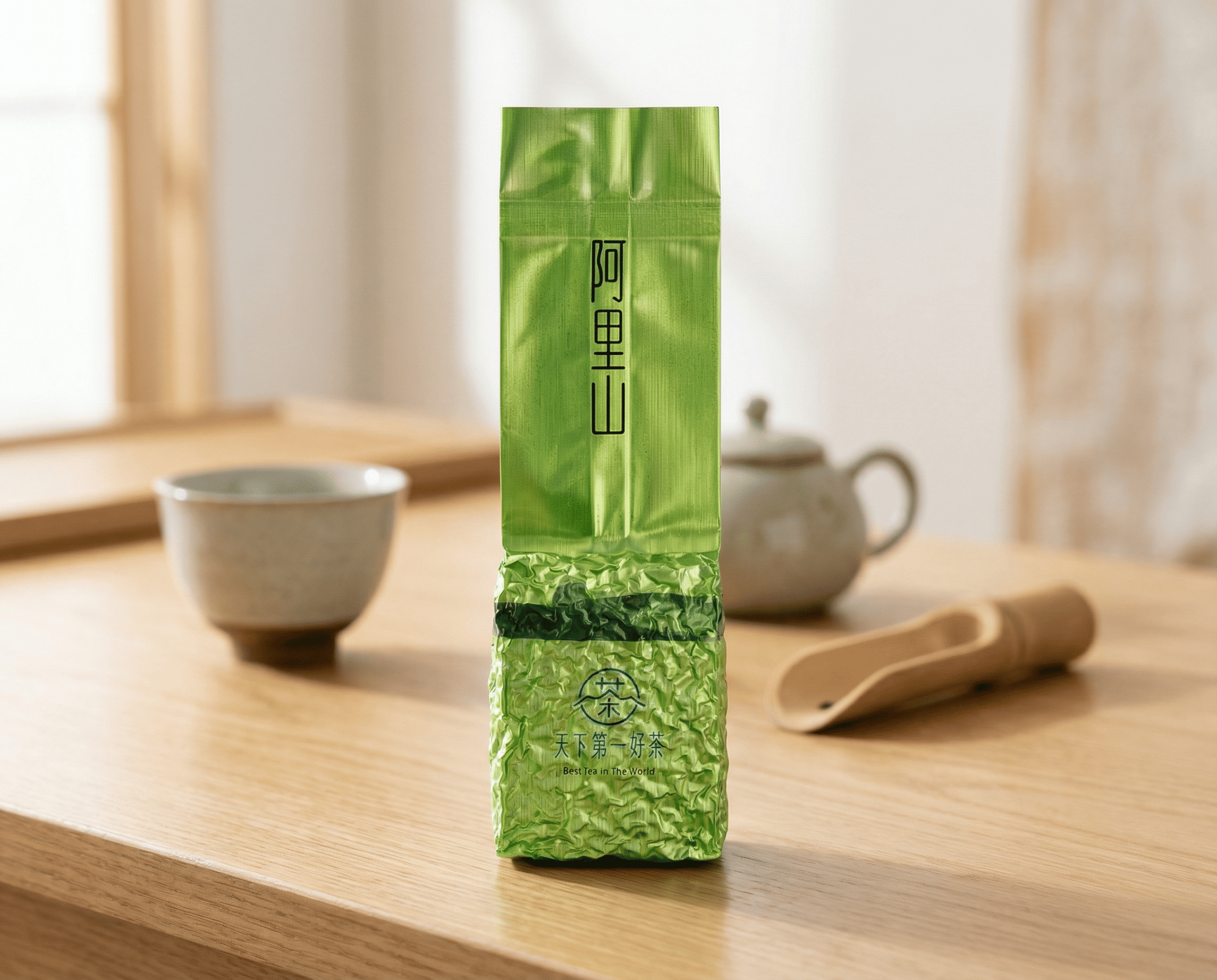
 Alishan tea is one of Taiwan's most iconic high-mountain teas, grown in a mountain environment at elevations of 1,000 to 1,600 meters, with a bright, uplifting aroma and a round, sweet mouthfeel. The cool climate at high altitude slows tea leaf growth, allowing richer accumulation of aromatic compounds — this is the fundamental reason Alishan tea's flavor surpasses that of lowland tea.
Alishan tea's production emphasizes hand-picking and refined oxidation techniques. Rich in tea polyphenols, L-theanine, and natural minerals, it is an excellent choice for daily tea drinking.
CONTENTS
Key Highlights
1. Growing Environment · Cultivars · Harvesting
2. Five-Step Tea Processing
3. Flavor Profile
4. Storage & Brewing Methods
Cultivation & Harvesting
🏔 Environment & Soil
High altitude, abundant rainfall, year-round cloud cover, and significant day-to-night temperature variation. Mineral-rich mountain soil enables more complete accumulation of aromatic compounds.
🌿 Cultivar Selection
Qingxin Oolong offers bright, delicate floral notes; Jin Xuan features a naturally milky, smooth sweetness. Spring and winter harvests yield the most consistent quality.
✋ Harvesting Method
Spring (March–April) and winter (October–November) are the optimal harvest periods. Hand-picked one-bud-two-leaf shoots are preferred to preserve leaf integrity.
Want to taste authentic Alishan high-mountain tea? BESTEA's Alishan Tea and Alishan Jin Xuan are shipped directly from the source.
Explore the Alishan Tea Series → Production Process
Alishan tea is crafted through a carefully managed semi-oxidation process, where each step directly influences the final aroma and flavor.
Step
Description
Key Points
Hand-Picking
Harvested at dawn, when the tea leaf's essence is most concentrated
Select one-bud-two-leaf tender shoots; leaf completeness is key
Sun Withering
Allows moderate moisture loss from the leaves, initiating aroma transformation
Spread on bamboo trays and turned regularly for even exposure
Resting & Tossing
Continued oxidation develops the floral aroma characteristic of oolong tea
Temperature and humidity control are critical to the aroma direction
Fixation & Rolling
Halts enzyme activity to lock in aroma; shapes the leaf appearance
Duration and temperature affect the final flavor and color
Drying & Roasting
Removes moisture and stabilizes quality
Moderate roasting adds aromatic depth and extends shelf life
Flavor Profile
Rich Aroma
The high-mountain environment allows tea leaves to accumulate rich aromatic compounds. Qingxin Oolong carries orchid fragrance, while Jin Xuan features a natural milky aroma.
Smooth Taste
Crisp and fresh on the first sip, followed by fruit notes and sweetness — a lasting sweet aftertaste without bitterness or astringency.
Bright Liquor
The tea liquor is clear and translucent with a golden hue — an important indicator of good quality.
High Durability
Quality Alishan tea can be steeped for 5+ consecutive infusions, with each infusion revealing slightly different layers — well worth savoring slowly.
Alishan tea is rich in tea polyphenols and L-theanine. Drinking after meals helps cut through richness; the calming properties of L-theanine provide a steadier alertness without easily causing jitters.
The above is general health knowledge for reference only and does not constitute medical advice. Please consult a healthcare professional if you have specific health concerns.
The Authentic Taste of Alishan's High Mountains
BESTEA carefully selects Alishan Tea and Alishan Jin Xuan — hand-picked, SGS pesticide-free certified, with quality assured from the tea garden to your cup, so you can enjoy authentic high-mountain tea at home.
Storage & Brewing Methods
Storage Tips
Consideration
Recommendation
Avoid Moisture
Store in a sealed container in a cool, dry place
Avoid Direct Sunlight
Tea leaves oxidize and degrade easily when exposed to light; store in a dark location
After Opening
Consume within 3 months after opening; unopened tea can be stored for approximately 1 year
Brewing Guide
Teaware
A ceramic gaiwan or porcelain teapot best showcases Alishan tea's floral layers
Water Temp
90–95°C to fully release the floral aroma and sweetness of high-mountain oolong
First Infusion
Approx. 50–60 sec; add 10–15 sec for each subsequent infusion
Leaf Amount
Approx. 3–4g of tea leaves per 150ml of water
Q What are the main cultivars of Alishan tea?
The two primary cultivars in the Alishan tea region are Qingxin Oolong and Jin Xuan. Qingxin Oolong is renowned for its bright floral aroma and delicate mouthfeel — the classic Alishan representative. Jin Xuan features a natural milky aroma, smooth and sweet, making it ideal for newcomers to Taiwanese tea. Additionally, Ruili tea gardens produce small quantities of distinctive oolong worth trying.
Q Is Alishan tea high in tea polyphenols?
Alishan tea is a semi-oxidized oolong with moderate polyphenol content — it retains more than fully oxidized black tea but less than unoxidized green tea. The slow growth in the high-mountain environment allows more complete accumulation of polyphenols and L-theanine, resulting in quality that typically surpasses lowland oolong.
Q How do I choose and store Alishan tea?
When purchasing, look for tightly rolled leaves with a vibrant green luster and a naturally fresh aroma. Verify that the brand provides origin information and pesticide test reports. For storage, keep it sealed, away from light, at room temperature in a dry place. Consume within 3 months after opening.
Q Where can I buy authentic Alishan tea?
BESTEA's Alishan Tea and Alishan Jin Xuan are both sourced from the Chiayi high-mountain tea region — hand-picked, SGS pesticide residue tested and certified, with transparent and traceable origin information.
BESTEA — ALISHAN PREMIUM
High-Mountain Tea Character from Alishan — Worth Savoring Slowly
From pristine mountain forests at 1,000+ meters elevation, nurturing one of Taiwan's most iconic high-mountain teas. BESTEA — hand-picked, SGS pesticide-free certified, shipped directly from the source to you.
KEEP READING
You Might Also Like


