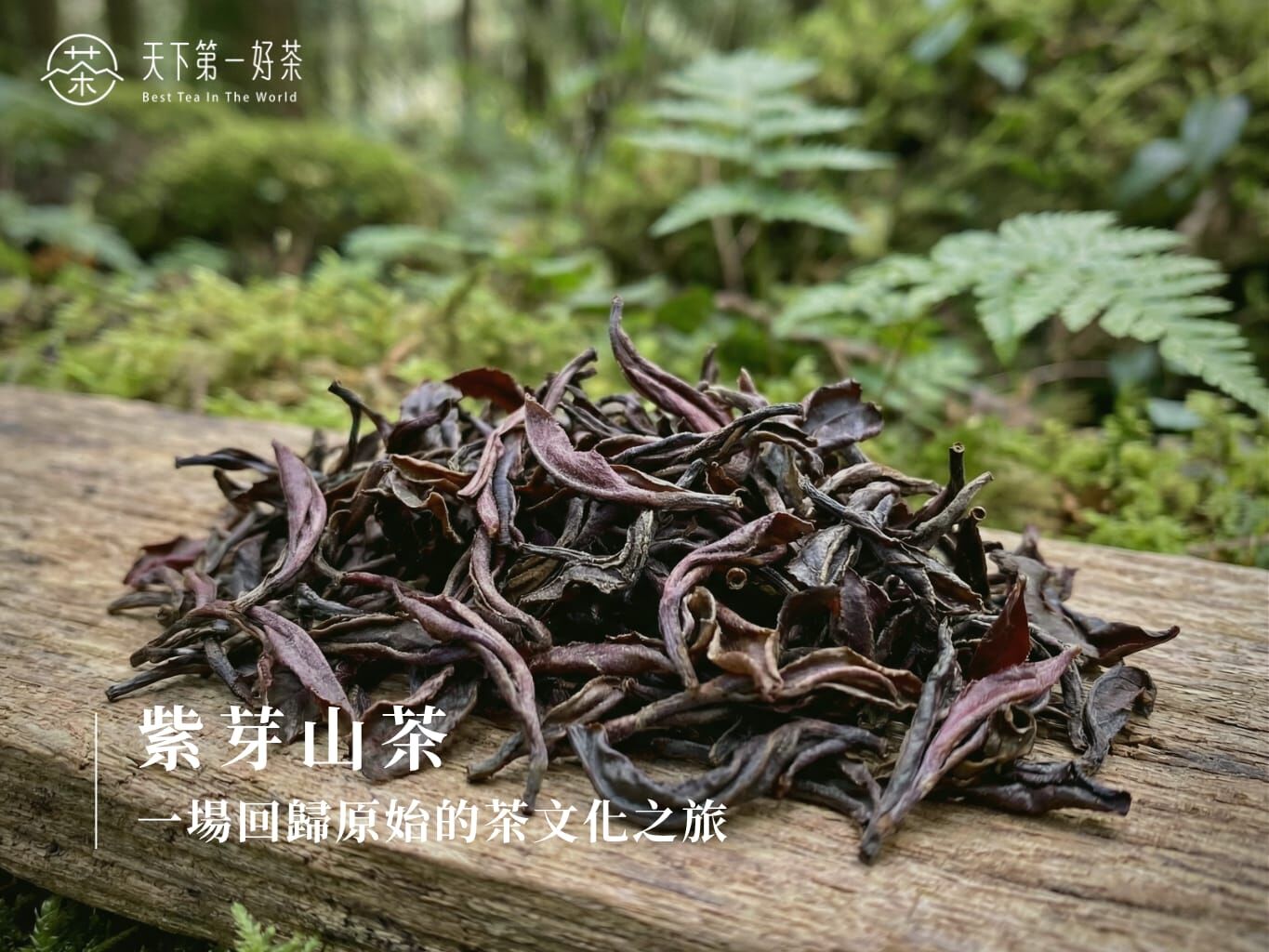
 Purple bud mountain tea is a rare tea characterized by its naturally purple tender buds. Its unique purple appearance comes from the accumulation of a large amount of anthocyanins in the buds. This color is not artificially dyed, but naturally formed by the tea tree under specific climate and altitude conditions. The deeper the purple, the richer the anthocyanin content usually is, and the more complex the flavor layers tend to be.
Compared with ordinary oolong tea or high-mountain tea, purple bud mountain tea is relatively rare on the market because of its demanding growing conditions and low yield—this is also one of the reasons it fascinates tea lovers.
CONTENTS
Key Points of This Article
1. Historical origins
2. Cultivation and production craftsmanship
3. Varieties and flavor characteristics
4. Health benefits
The Historical Origins of Purple Bud Mountain Tea
Written records of purple bud mountain tea can be traced back to the Ming Dynasty, with the earliest records appearing around the Wuyi Mountain area. At that time, tea farmers discovered that certain tea trees would produce purple-tinted tender buds during specific seasons. After brewing, the aroma and taste differed from ordinary tea, so they began to intentionally preserve and cultivate these varieties.
After the Qing Dynasty, purple bud tea gradually appeared in literati notes and imperial tribute records, where it was described as a rare tea “different in color yet mellow in taste.” Modern research has further found that the formation of its purple color is closely related to the accumulation of anthocyanins, and the anthocyanin content is influenced by environmental factors such as altitude, light intensity, and temperature differences. This also explains why not every tea garden can produce purple bud tea consistently.
Cultivation and Production Craftsmanship of Purple Bud Mountain Tea
1
High-altitude growing environment
An elevation above 800 meters, low temperatures, strong ultraviolet rays, and large day-night temperature differences are the key to promoting anthocyanin accumulation. Taiwan’s Alishan and Lishan tea regions, as well as the Wuyi Mountain area in Fujian, all have suitable natural conditions.
2
Careful selection of strains
Tea trees with the most stable purple characteristics and the fullest buds are selected from a large population for propagation. This requires observation over multiple growing seasons and cannot be replaced by quick methods.
3
Spring and summer picking
Spring picking offers delicate aroma and richer layers; in summer, anthocyanin content is higher and the sweet aftertaste is more obvious. Hand-picking of one bud and two leaves is the standard, because machine picking can easily affect color uniformity and flavor purity.
4
Withering, rolling, oxidation, and drying
The process is similar to oolong tea, but because purple tea buds are tender and delicate, the control of withering time and temperature must be more precise. The drying stage directly affects whether the anthocyanin color can be preserved intact.
Taiwanese high-mountain tea crafted with the same dedication
BESTEA carefully selects high-mountain teas from Alishan, Lishan, Dayuling, and other production regions. Every tea comes from tea farmers who are just as serious about tea-making craftsmanship, with quality controlled from picking to shipment.
Varieties and Flavor Characteristics of Purple Bud Mountain Tea
Varietal diversity
“Purple bud mountain tea” is not a single cultivar, but a general term for a category of teas characterized by purple tender buds, covering multiple subspecies and lines. Different lines show obvious differences in aromatic expression: some are led by orchid fragrance and honey aroma, while others carry ripe fruit notes and herbal undertones. Even within the same line, different production regions and different processing methods can produce flavor differences—this is exactly what keeps tea lovers so engaged in searching, comparing, and enjoying them.
Four major flavor characteristics
Orchid-honey aroma
After the liquor opens up, the aroma is rich, with floral notes in the front and honey sweetness in the back. The two layers are clearly defined without blending into each other.
Refreshing sweetness
The tea liquor enters smoothly, with a natural and lasting sweetness. This depth comes from the combined effect of theanine and glycoside compounds, not from added sweetness.
Salivating sweet return
After drinking, the mouth continues to produce saliva, and the throat finish is long, making it ideal for quiet, mindful appreciation.
Distinctive character
Anthocyanins bring a slight but noticeable astringent grip, a rare experience among other tea types, and one of the most intuitive flavor markers for identifying purple bud tea.
Taiwanese high-mountain oolong tea also has rich aromatic layers and a clear sweet aftertaste, making it an ideal entry point for appreciating the complexity of tea flavors.
Learn about Taiwanese tea varieties → 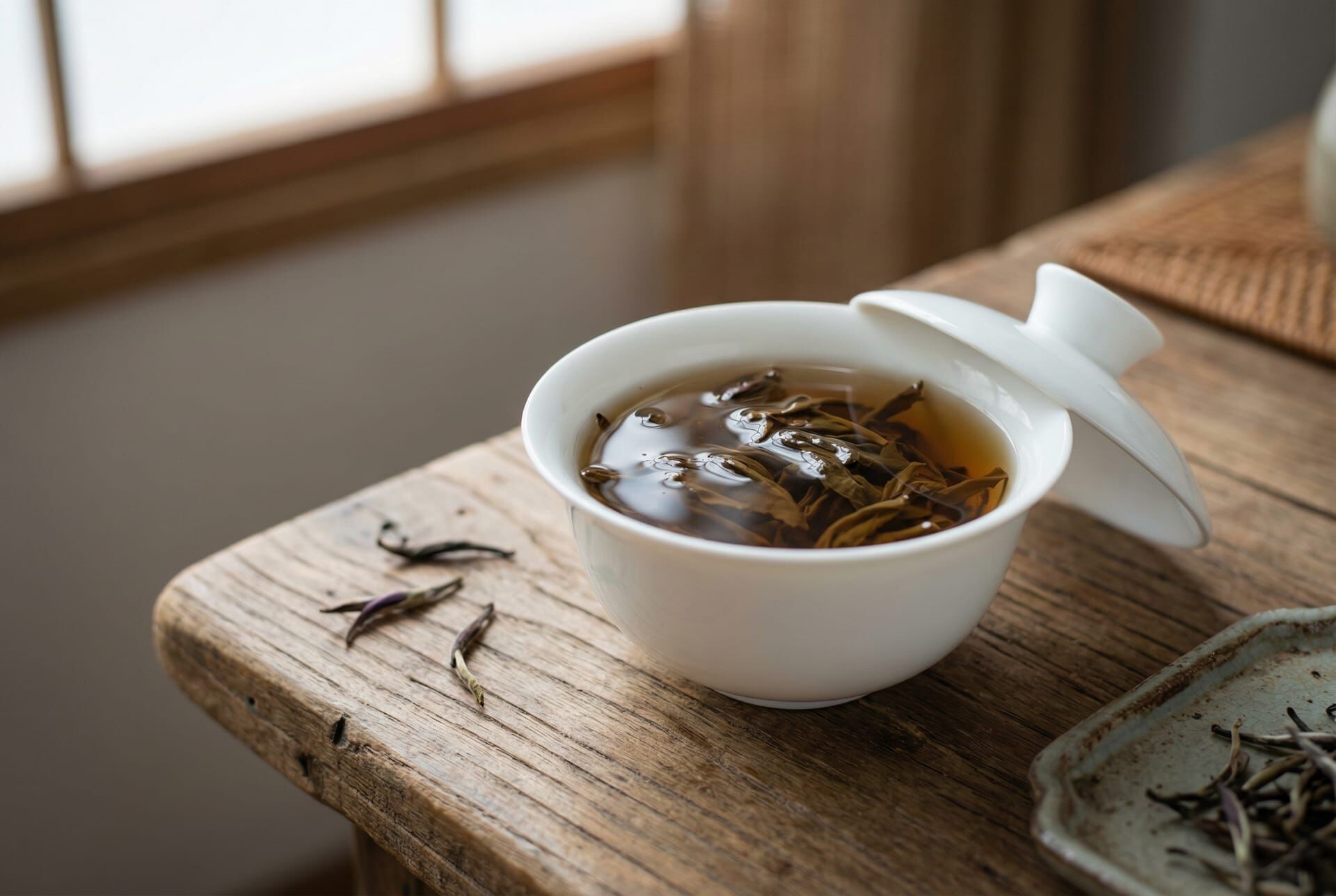 Health Benefits of Purple Bud Mountain Tea
Because purple bud mountain tea contains abundant anthocyanins, it adds one more noteworthy aspect beyond the health-related compounds commonly found in ordinary tea:
Anthocyanins
Antioxidant action
Anthocyanins are among the natural pigments currently known for relatively strong antioxidant capacity, helping to combat free radicals and slow cellular oxidation. Their content is usually higher than in ordinary tea.
Tea polyphenols
Cardiovascular protection
Rich in catechins and other tea polyphenols, it has supportive effects on cardiovascular health and immune system maintenance, similar to high-quality high-mountain teas.
Theanine
Relaxation and ease
L-theanine helps promote relaxation and ease tension, with effects similar to those found in other high-quality high-mountain teas.
Caffeine
Gentle stimulation
Its caffeine content is close to that of ordinary oolong tea, offering a gentle and lasting uplifting effect, and is less likely than coffee to cause heart palpitations.
The information above is for general health knowledge reference. If you have specific health concerns, it is recommended to consult a medical professional.
“What makes purple bud mountain tea special is that it is the result of natural conditions, cultivar characteristics, and tea-making craftsmanship all working together—without any one of these, that purple color would not appear, and that aroma would not take shape.”
FREQUENTLY ASKED
Frequently Asked Questions
Q Why is purple bud mountain tea purple?
Its purple color comes from anthocyanins and natural pigments accumulated in the tea leaves. In high-altitude environments with strong ultraviolet light and low temperatures, the tea tree synthesizes more anthocyanins for self-protection, causing the tender buds to show varying shades of purple. The deeper the color, the higher the anthocyanin content usually is, and it also reflects a more demanding growing environment.
Q How should purple bud mountain tea be brewed?
The recommended water temperature is 85–90°C. For the first infusion, you may quickly rinse the tea and pour it out, then begin drinking from the second infusion. Steep each infusion for 30 seconds to 1.5 minutes, adjusting according to personal taste. It can generally be brewed 5–7 infusions, with the second to third infusions usually showing the most complete aroma. The water temperature should not be too high, so as not to damage the delicate floral layers.
Q What health benefits does purple bud mountain tea have?
Purple bud mountain tea is rich in anthocyanins, tea polyphenols, and theanine. The antioxidant capacity of anthocyanins is more prominent than in ordinary tea, and they play a supportive role in maintaining cellular health. Tea polyphenols provide some protective effect for the cardiovascular system, while theanine helps with relaxation and easing tension. The above is general health knowledge for reference; if you have specific concerns, consulting a doctor is recommended.
Q What is the difference between purple bud mountain tea and ordinary oolong tea?
The main difference lies in its anthocyanin content and unique astringent grip. Ordinary oolong tea mainly derives its flavor from tea polyphenols and theanine; purple bud mountain tea, on top of that, has the distinctive character brought by anthocyanins, with a slight but noticeable astringent sensation in the liquor—a rare experience among other tea types.
BACK TO ORIGINS
If you have standards for good tea, start from Taiwan’s high mountains
BESTEA carefully selects top production regions such as Alishan, Lishan, and Dayuling. Every tea is from a real origin and real craftsmanship. For people who truly care about tea, this is where to begin.
KEEP READING
You May Also Like


