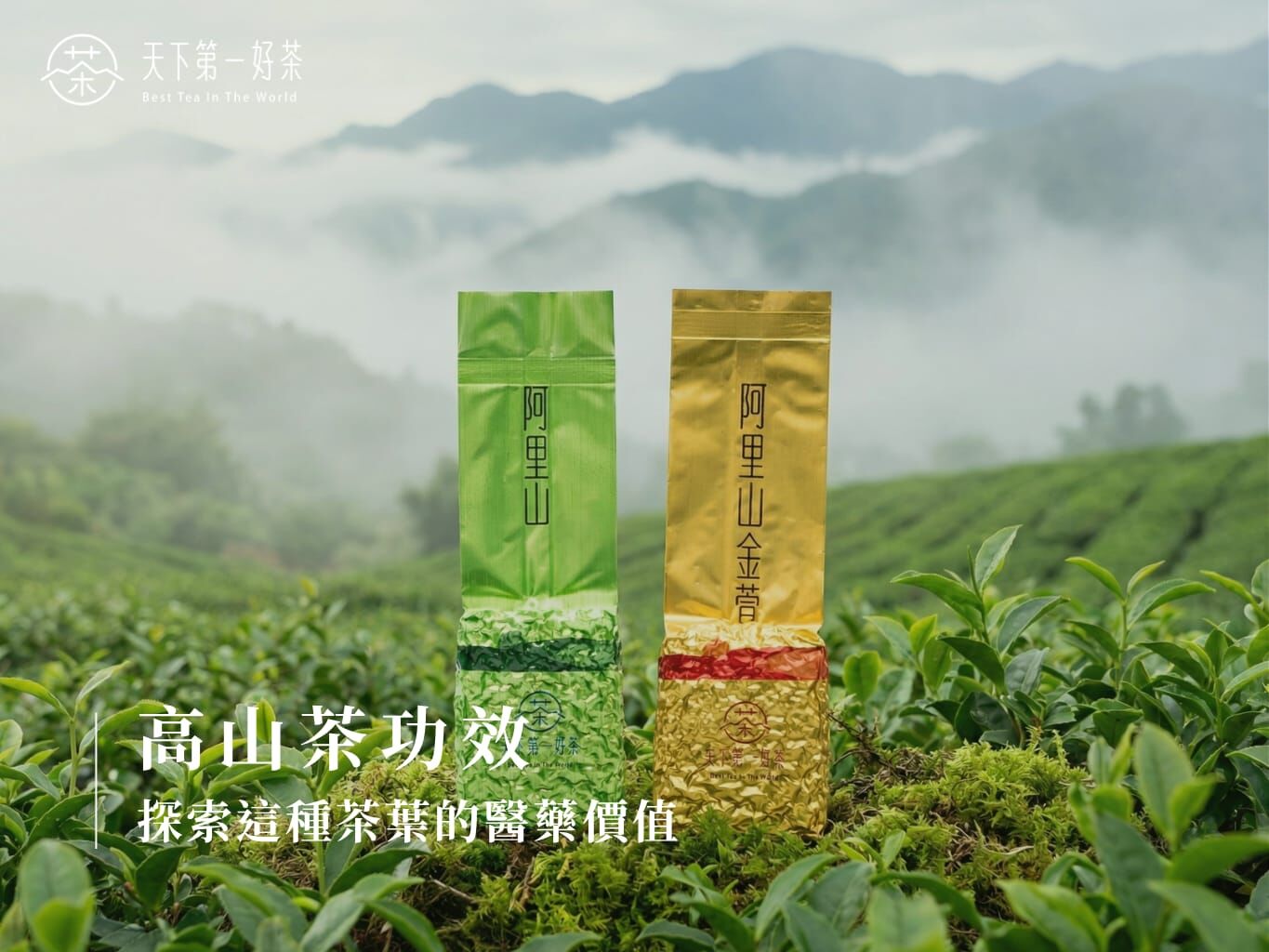
 What makes high-mountain tea different from lowland tea is not just the aroma. The growing environment of high altitude, low temperatures, and misty mountain clouds gives high-mountain tea a more delicate aromatic and flavor profile. This article covers the main compounds in Taiwanese high-mountain tea, its caffeine content, its mouthfeel, and common drinking questions, to help you get to know this tea better.
CONTENTS
Key Points of This Article
1. Why does the high-mountain environment make tea more popular?
2. Main compounds: tea polyphenols and catechins
3. Caffeine content and common questions
4. Mouthfeel and drinking characteristics
5. Compounds and everyday drinking
Taiwanese high-mountain tea includes production regions such as Alishan, Lishan, and Dayuling, each with different elevation characteristics and flavor layers.
Explore the loose tea collection → Why Does the High-Mountain Environment Make Tea More Popular?
Alishan
1,250m+
Fresh floral-fruity notes
Lishan
1,600m+
Delicate and mellow sweetness
Dayuling
2,300m
High-cold richness
Taiwan’s most famous high-mountain tea regions include Alishan, Lishan, and Dayuling, usually at elevations above 1,250 meters, with Dayuling at about 2,300 meters. These regions have high altitude, misty conditions, and large day-night temperature differences, which slow the growth of the tea trees and help create the more delicate aroma, sweet aftertaste, and layering that high-mountain tea is known for.
The cultivars grown in Taiwan’s high-mountain regions include Qing Xin Oolong, Jin Xuan, and Si Ji Chun. Different production areas and cultivars create high-mountain teas with their own distinct characteristics, so their aroma and mouthfeel also vary slightly.
The Main Compounds in High-Mountain Tea: Tea Polyphenols and Catechins
✓
Tea polyphenols
One of the main compounds in high-mountain tea, making up about 20–35% of the dry leaf and shaping the mouthfeel and aroma of the brew.
✓
Catechins
The main type of tea polyphenol, and an important source of the astringency and lingering sweet aftertaste of high-mountain tea.
✓
Amino acids
Including L-theanine, the source of the distinctive sweetness and umami of high-mountain tea; levels are usually higher in cool, high-altitude conditions.
✓
Effect of oxidation level
Most high-mountain tea is a partially oxidized oolong, so its polyphenol and catechin profile sits between green tea and black tea.
Start with an everyday cup of high-mountain tea
BESTEA offers Taiwanese high-mountain whole-leaf tea, making it easier for you to appreciate the delicate aroma and layers of high-mountain tea in everyday drinking.
Caffeine Content of High-Mountain Tea and Common Questions
1
Caffeine is usually lower than in lowland tea
Caffeine levels in high-mountain tea are often described as lower than in lowland tea, though they vary with cultivar, harvest season, and brewing.
2
Brewing method affects extraction
With the same leaves, cold brewing extracts less caffeine than hot brewing, and the taste is gentler.
3
Individual sensitivity varies
If you are sensitive to caffeine, start with a small amount, or choose cold brewing or a short steep.
Mouthfeel and Drinking Characteristics of High-Mountain Tea
Long-lasting sweet aftertaste
High-mountain tea is known for its pronounced sweet aftertaste and long finish in the throat, a feature many tea lovers enjoy.
Smooth mouthfeel
High-mountain oolong often gives a softer and more delicate impression, making it an easier everyday tea for many people to accept.
Holds up to many infusions
High-mountain tea leaves are usually thick and rich in pectin, so they can be re-steeped 5–7 times, with the aroma shifting from one infusion to the next.
If you have a sensitive stomach, you may start by trying small amounts of roasted oolong or black tea, which are usually easier to drink than drinking light green tea on an empty stomach.
View the tea bag collection → 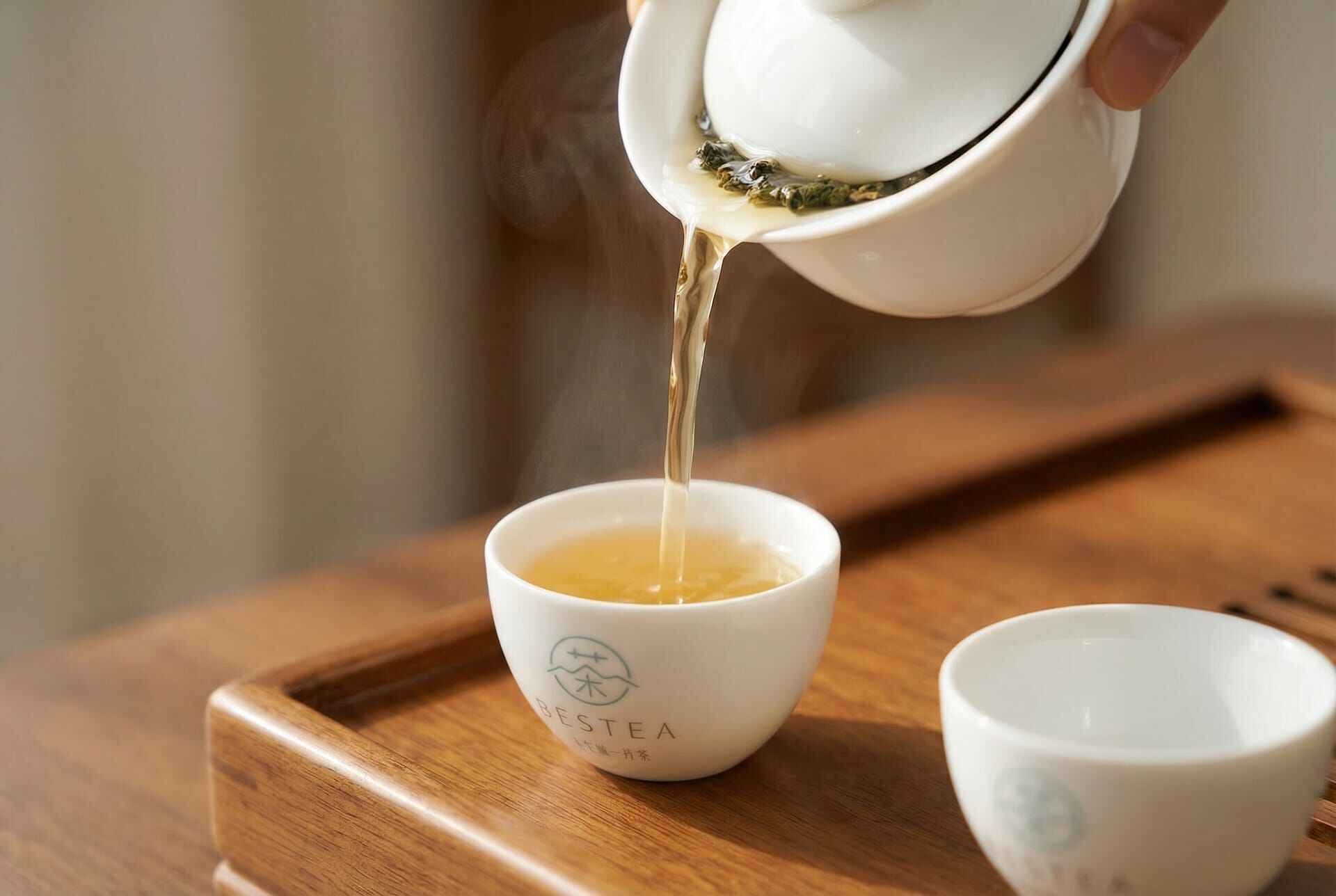 Compounds and Everyday Drinking in High-Mountain Tea
Tea polyphenols
Main taste compounds
Tea polyphenols give the brew much of its body and grip; the hotter the water and the longer the steep, the more of them are extracted and the more noticeable the astringency becomes.
Catechins
Astringency and sweet aftertaste
Catechins are the main type of tea polyphenol; cold brewing extracts fewer of them, so the astringency is lower and the sweet aftertaste softer, while hot brewing makes both more pronounced.
Drinking tips
Regular drinking
Drinking tea steadily and moderately in daily life is usually easier to build into a comfortable rhythm than drinking a large amount occasionally.
“A cup of high-mountain tea is not only about aroma—it is also about the details left behind by the environment in which it grew. Altitude, mist, and temperature difference slowly nurture the flavor into every leaf. What it brews is not just something delicious, but also a tea-drinking habit that is well suited to slowly building up as part of everyday life.”
The content above is a general summary of tea compounds and drinking impressions and does not constitute medical advice. If you have a specific health condition, it is recommended to consult a qualified medical professional first.
FROM MOUNTAIN TO CUP
Delicate flavor from the high mountains
BESTEA’s Taiwanese high-mountain teas let you gradually experience the delicate aroma, sweet aftertaste, and layering of high-mountain tea in daily drinking. One cup a day—enjoy the quiet moment each brew brings.
FREQUENTLY ASKED
Frequently Asked Questions
Q Is high-mountain tea suitable for daily drinking?
It can be one of your daily drinks, but moderate consumption is still recommended. If your digestive system is more sensitive, you may also prioritize gentler tea types and avoid drinking tea on an empty stomach.
Q Can pregnant women drink high-mountain tea?
If pregnant women wish to drink tea, it is recommended to first discuss it with a doctor. The caffeine in high-mountain tea is usually gentler than coffee, but intake should still be controlled and strong brewing should be avoided.
Q How should high-mountain tea be stored to maintain its quality?
After sealing it, store it in a cool, dry place and avoid direct sunlight and odor contamination. Using an opaque airtight container or a vacuum bag usually works better.
Q What is the difference between high-mountain tea and lowland tea?
The most obvious differences between high-mountain tea and lowland tea are usually found in aroma, sweet aftertaste, and flavor layering. Because of its unique growing environment, high-mountain tea often gives a more delicate and more re-steepable impression.
KEEP READING
You May Also Like


